
Quote Stories
Lines the River Remembers
Elian arrives with a finished vision and leaves with a wall people can find themselves in.
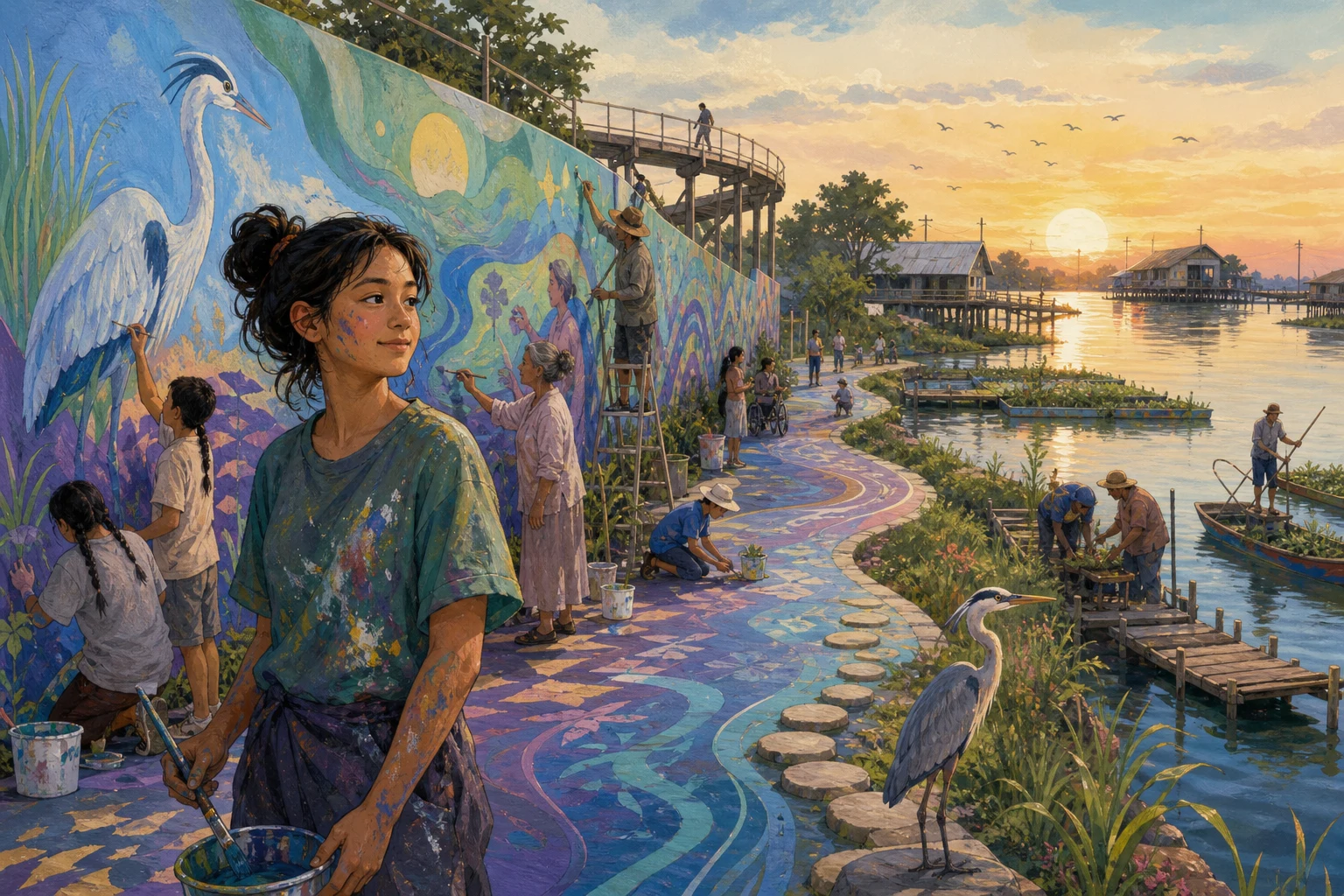
Elian carried the rolled sketch under one arm and a tin of turquoise paint under the other. By sunrise, he had already pictured the finished wall: a silver heron lifting from reeds, its wings sweeping toward the river, its beak pointed at the brightening sky.
The wall stood beside the busiest raised walkway in Maruva. Boat builders passed it on their way to the workshops. Children used its corner as a shortcut to school. Elders rested in the shade of the tea stall opposite it, watching the tide rise and fall between the houses.
Elian noticed none of this. He measured the wall, snapped a chalk line, and began.
For three days, he painted from memory. He added the heron, floating gardens, clouds like long brushstrokes, and a blue river curling through the center. The work was precise. People stopped to admire it.
Then, on the fourth morning, a dock worker named Sava stood with her hands on her hips.
“Where is the loading ramp?” she asked.
Elian looked at the mural. “It’s a river scene.”
“The ramp is part of the river.”
An elderly man from the tea stall pointed at the lower corner. “And the flood markers?”
A child carrying a school satchel added, “You forgot the stepping stones. That’s how we get across when the walkway is wet.”
Elian felt heat rise beneath his paint-splattered collar. He had expected criticism about color or composition. Instead, they were treating his mural like a map he had drawn incorrectly.
“It doesn’t have to show every single thing,” he said.
“No,” Sava replied. “But it should show something true.”
That night, Elian returned with a clean notebook. He sat beside the tea stall and asked Sava where the workers carried baskets when the tide was high. He asked the children which paths they took in the rain. He asked the elders where the old flood marks had been painted before the wall faded.
At first, everyone offered directions at once. Elian drew crooked arrows, circles, ladders, boats, garden plots, and a large question mark where three lanes met. His first page became so crowded that he nearly tore it out.
Instead, he turned to a fresh page.
The next morning, he covered part of the heron’s wing with whitewash. Then he handed brushes to the people who had stopped to watch.
“Mark what matters,” he said.
Sava painted a broad orange path from the docks to the storage sheds. The children added yellow stepping stones and a green route to school. An elder named Toma painted three blue lines beside the wall, each showing a different height the river had reached over the years. Someone added a purple circle around the tea stall. Someone else painted a tiny boat workshop beneath the heron’s wing.
Elian did not surrender the mural. He learned how to compose it around the marks already there.
The heron remained, but now its wings followed the orange dock path. The river held the yellow stepping stones. Floating gardens became islands of green, connected by careful lines. At the bottom, Elian painted a simple key: water, shelter, school, workshop, meeting place.
Two weeks later, the wall was finished. It was less symmetrical than Elian’s first design and far more alive. People paused to trace routes with their fingers. Visitors used the painted key to find the ferry landing. Children argued cheerfully over whose stepping stone had the best shape.
Elian stood across the lane, holding the original sketch. The silver heron on paper was elegant and alone. On the wall, it flew above a whole network of hands, paths, work, memory, and possibility.
Toma joined him. “You left space,” he said.
“I had to,” Elian replied.
“No,” said Toma, looking at the crowded wall. “You chose to.”
Elian folded the sketch and slipped it into his paint box. Before leaving, he added one final detail: a thin blue line leading beyond the edge of the wall, where the walkway continued toward places he had not yet seen.
Related Quote Stories
Wind-Tested
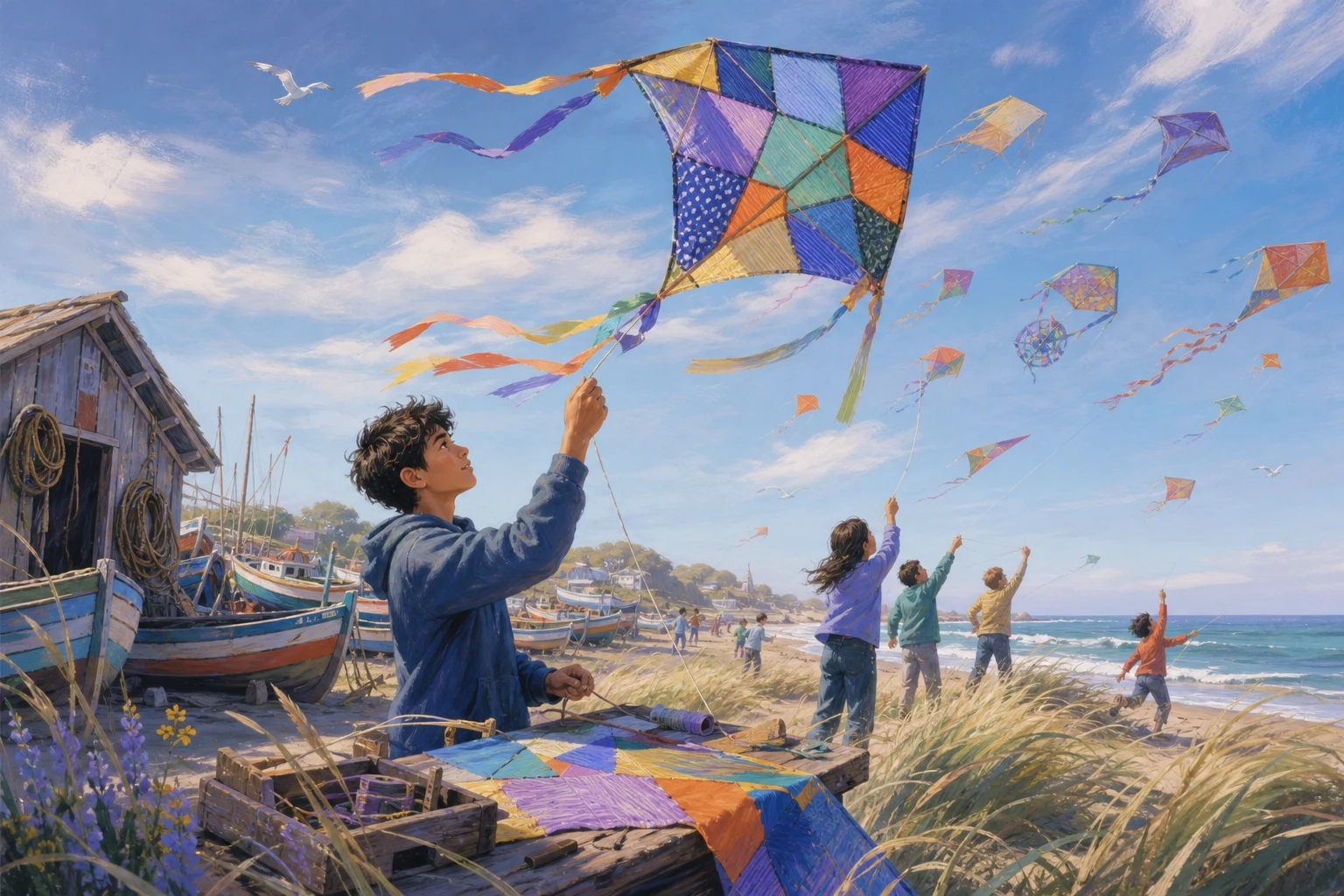
Ilya’s grand competition kite keeps tearing apart—until the scraps lead to an idea that can carry everyone’s hopes.
Read Story →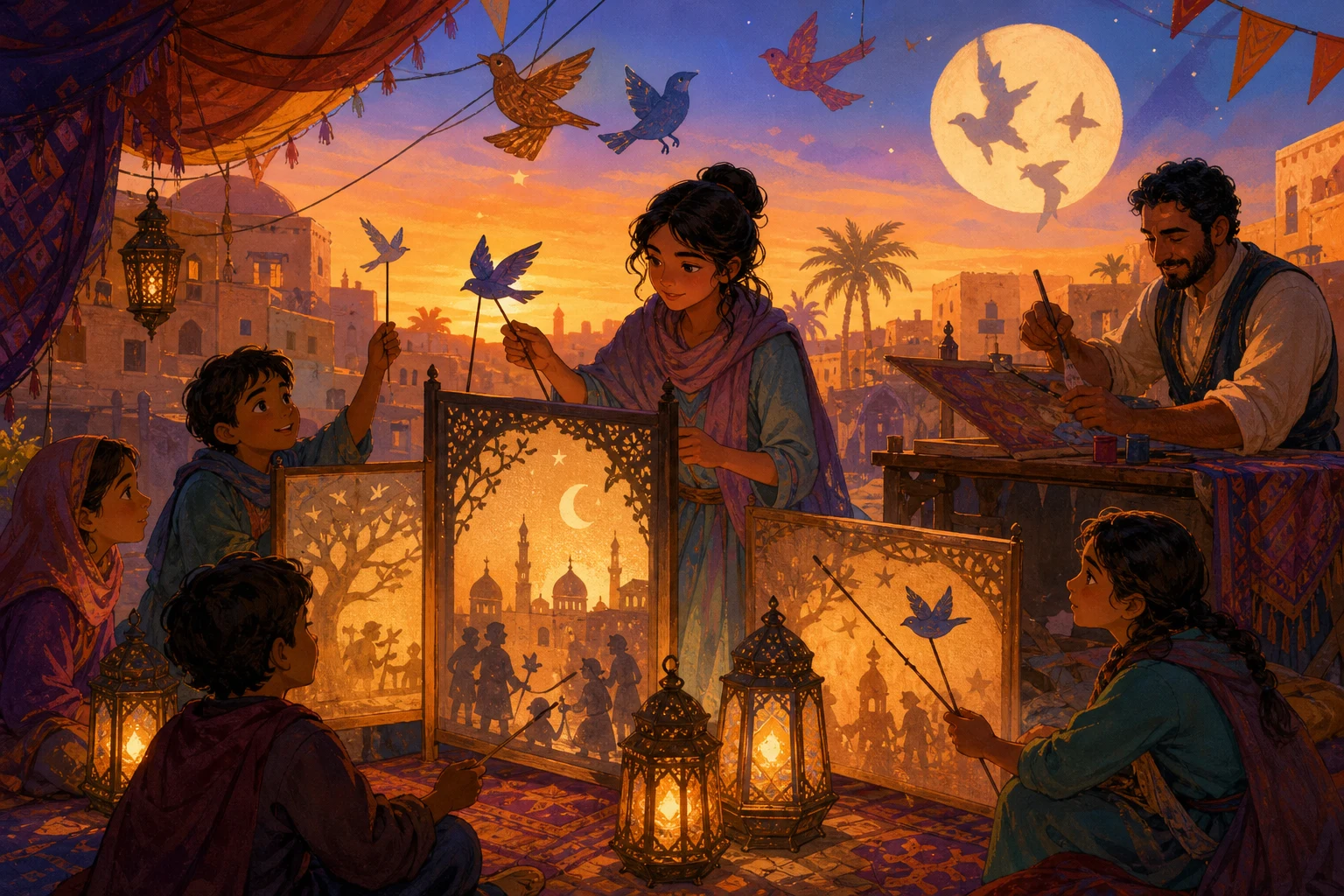
Lanterns Find Their Light
When glare erases her shadow-puppet show, Nadiya must choose between defending her perfect design and inviting others to remake it with her.
Read Story →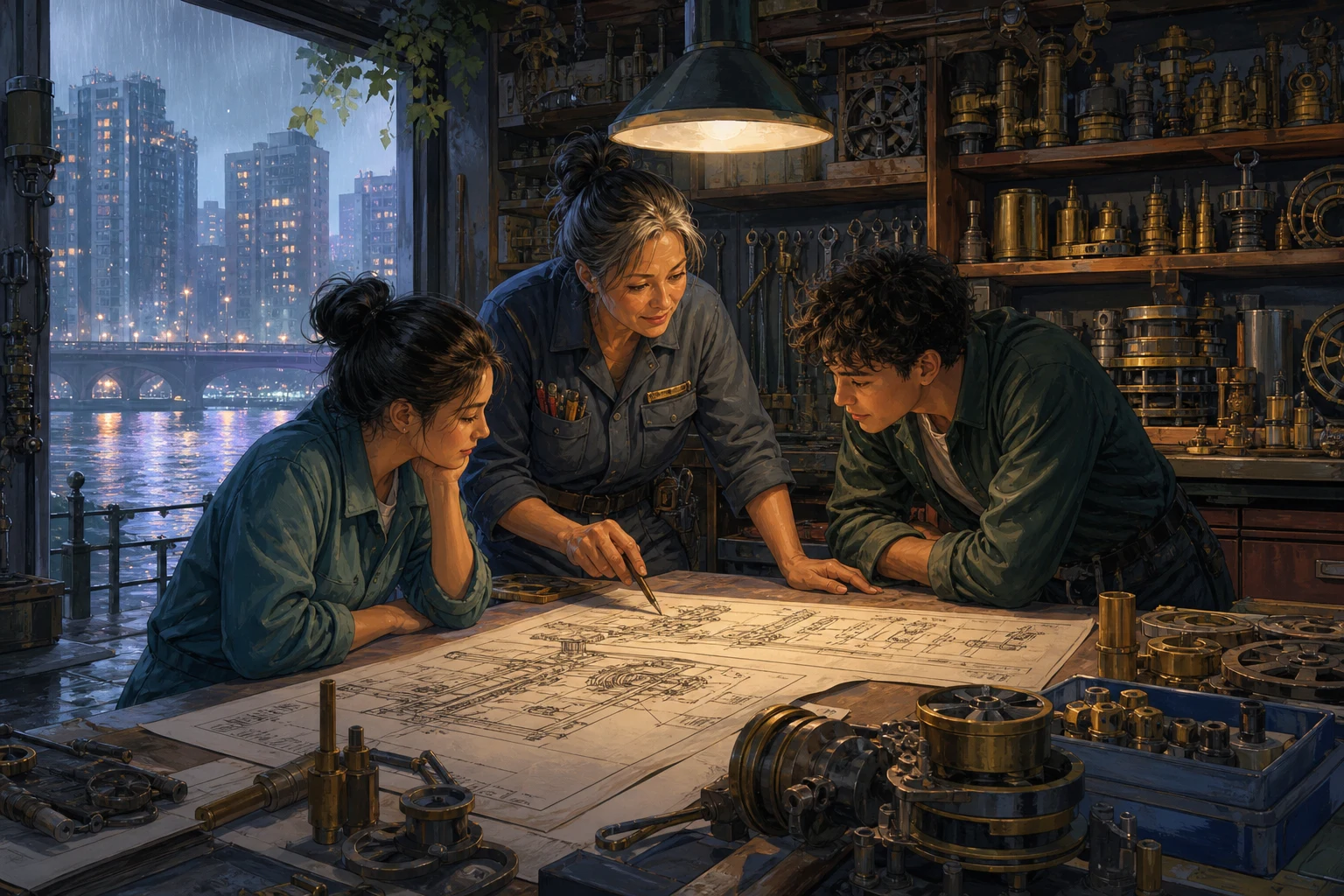
A Manual for the Moving World
Belen could fix an elevator by listening to its silence. Teaching someone else required her to explain the noise.
Read Story →