
Quote Stories
Lanterns Find Their Light
Nadiya learns that a performance shines brightest when everyone can enter it.
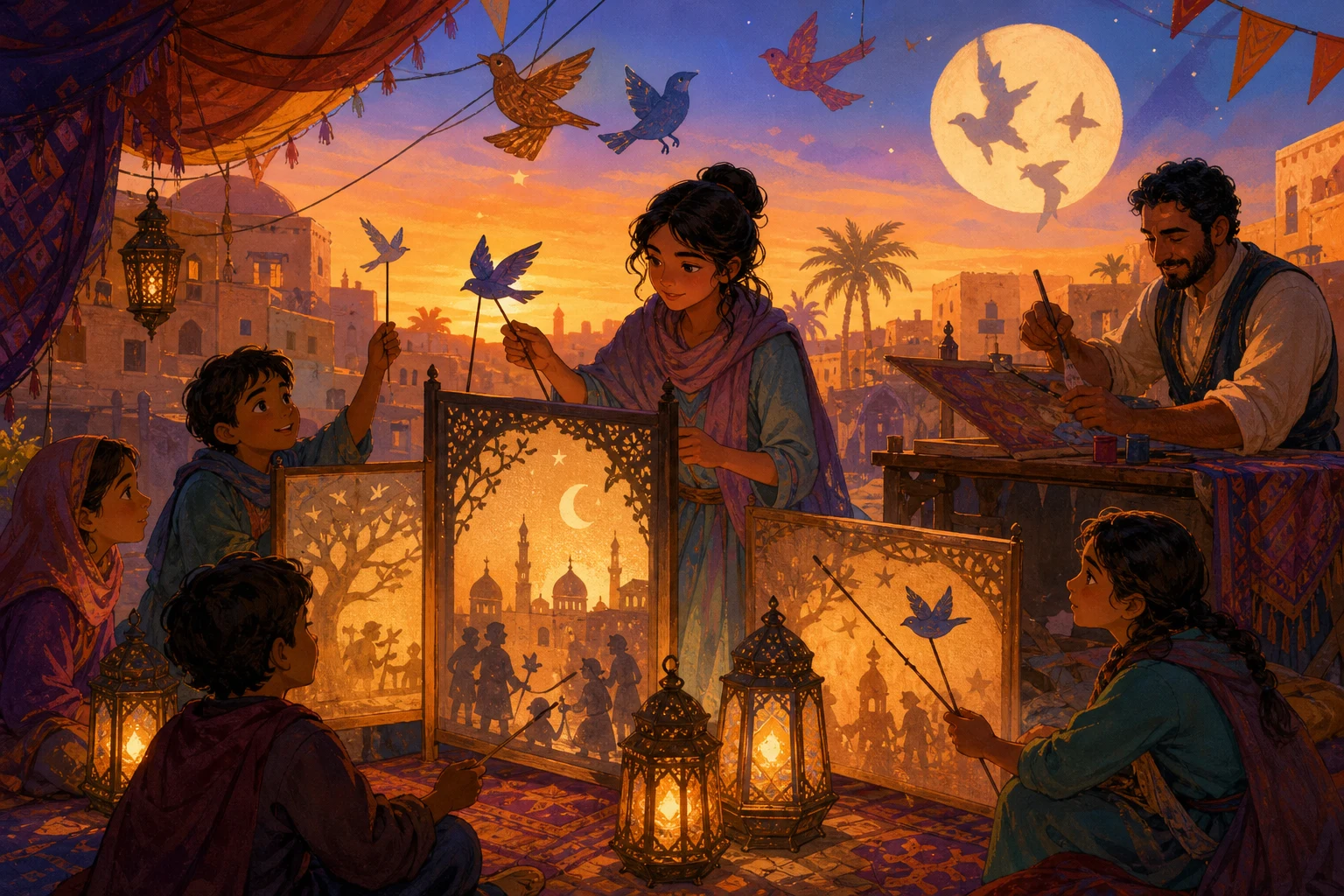
“You can’t see the moon!” a boy called from the front row.
Nadiya froze behind the painted screen. Her silver paper moon was supposed to rise over a caravan of dancing birds. Instead, the afternoon sun poured across the public square, flattening every shadow into a pale blur.
She lowered the puppet. Beyond the screen, market awnings snapped in the hot wind, and the festival crowd shifted impatiently. The traveling puppeteer who had trained her, Master Rafiq, tugged at a rope and tried to deepen the shade. It did not help.
Nadiya blamed the square, the festival committee, the sun, and finally the children for not looking carefully enough.
That evening, she carried the ruined puppet frames to her father’s sign-painting shop. He was bent over a wooden panel, brushing a line of blue around a golden letter.
“You came for paint?” he asked.
“I came because you know how to make things visible.”
He glanced at the moon puppet. They had not spoken much since Nadiya had left his shop to apprentice with the traveling troupe. She had wanted stages and applause; he had warned her that every audience saw differently.
Her father opened an old chest. Inside were scraps of translucent cloth, thin wire, colored glass, and a bundle of tiny oil lanterns.
“Before bright lamps,” he said, “we used distance, layers, and movement.”
Nadiya spent the next morning testing screens in the square. One became three. A blue cloth turned the sunlight copper. A lantern behind a painted sheet made a bird appear to flap. Then a gust sent the entire arrangement tumbling into a basket of dates.
The children laughed. Nadiya nearly packed everything away.
Instead, she asked them what they had seen.
“A bird with too many wings,” said the boy from the front row.
“A tunnel,” said a girl holding a broken puppet frame.
“Can we make the stars?” another asked.
By noon, the show had changed. Children painted small screens with stars, wells, cats, moons, and wandering camels. Nadiya built a path of lanterns so the audience could move the light themselves. Her father showed her how to make a hinged screen that opened like a shop door. Master Rafiq contributed a drumbeat for every change of scene.
The result was untidy. Some puppets wobbled. One camel lost its tail. The story acquired three new endings because the children could not agree where the caravan should go.
At sunset, Nadiya stood beside the first screen and felt the old wish for perfection tighten in her chest. Then the lanterns began to glow.
A child lifted a painted moon. Another sent a flock of paper birds across the cloth. Nadiya guided the central lantern, and her father opened the blue screen. Shadows gathered, separated, and gathered again—not as she had planned, but as if the whole square were dreaming together.
When the caravan reached the edge of the screen, the audience did not clap right away. They stepped forward, carrying their little lanterns, ready to add another road.
Nadiya smiled and moved aside.
There was room for one more light.
Related Quote Stories
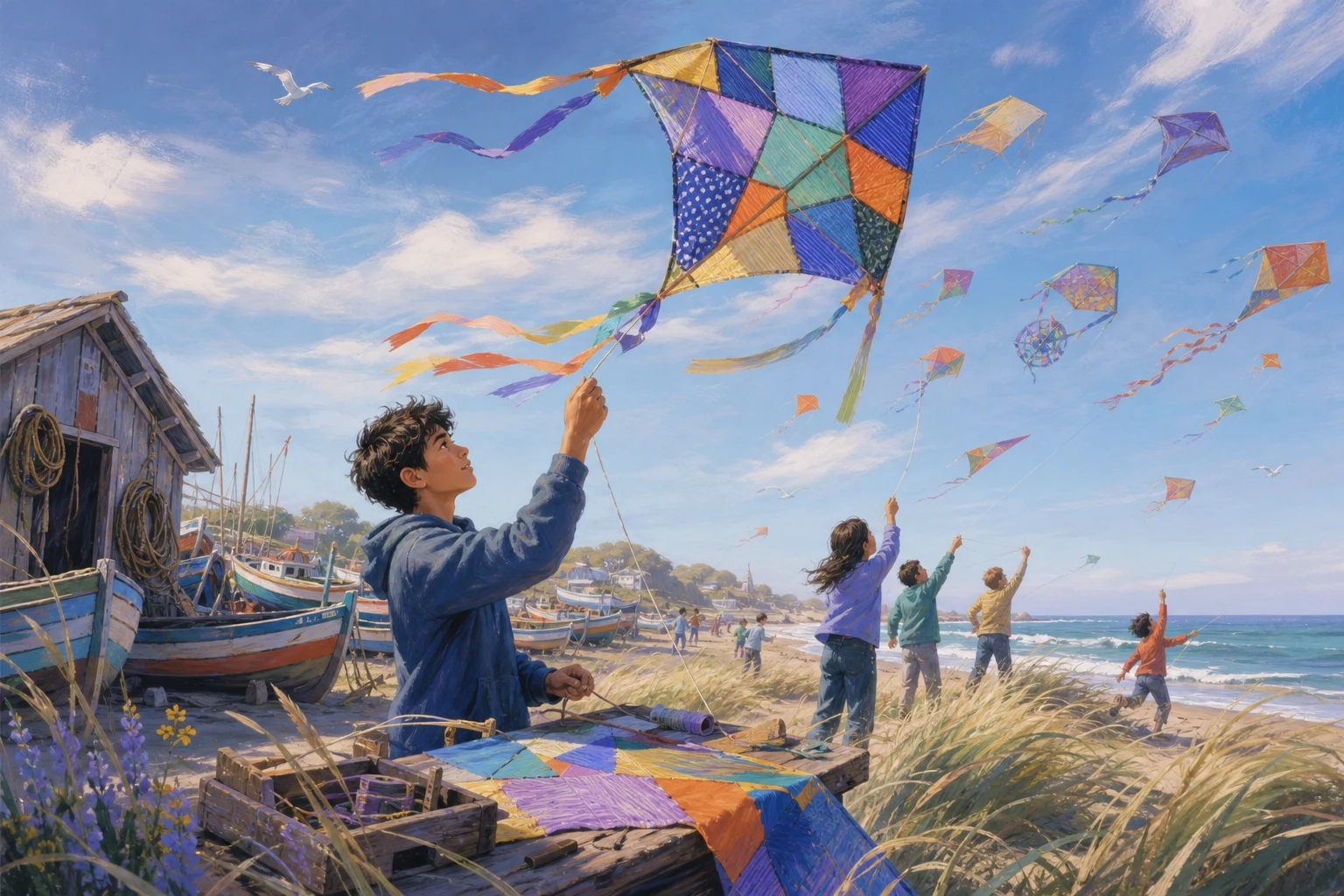
Wind-Tested
Ilya’s grand competition kite keeps tearing apart—until the scraps lead to an idea that can carry everyone’s hopes.
Read Story →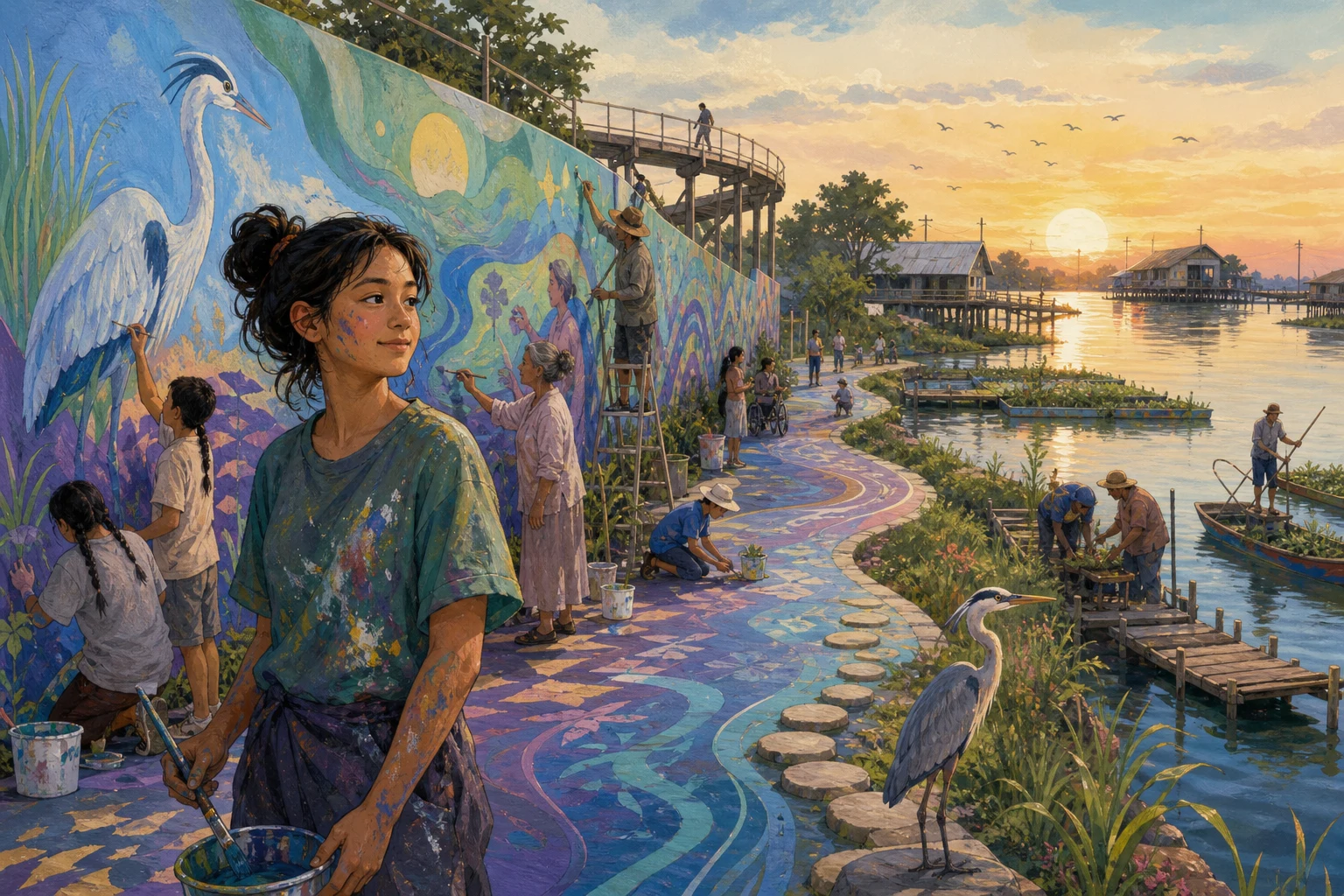
Lines the River Remembers
Elian’s first mural was beautiful, ambitious, and missing nearly everyone who used the lane. The second began with a question.
Read Story →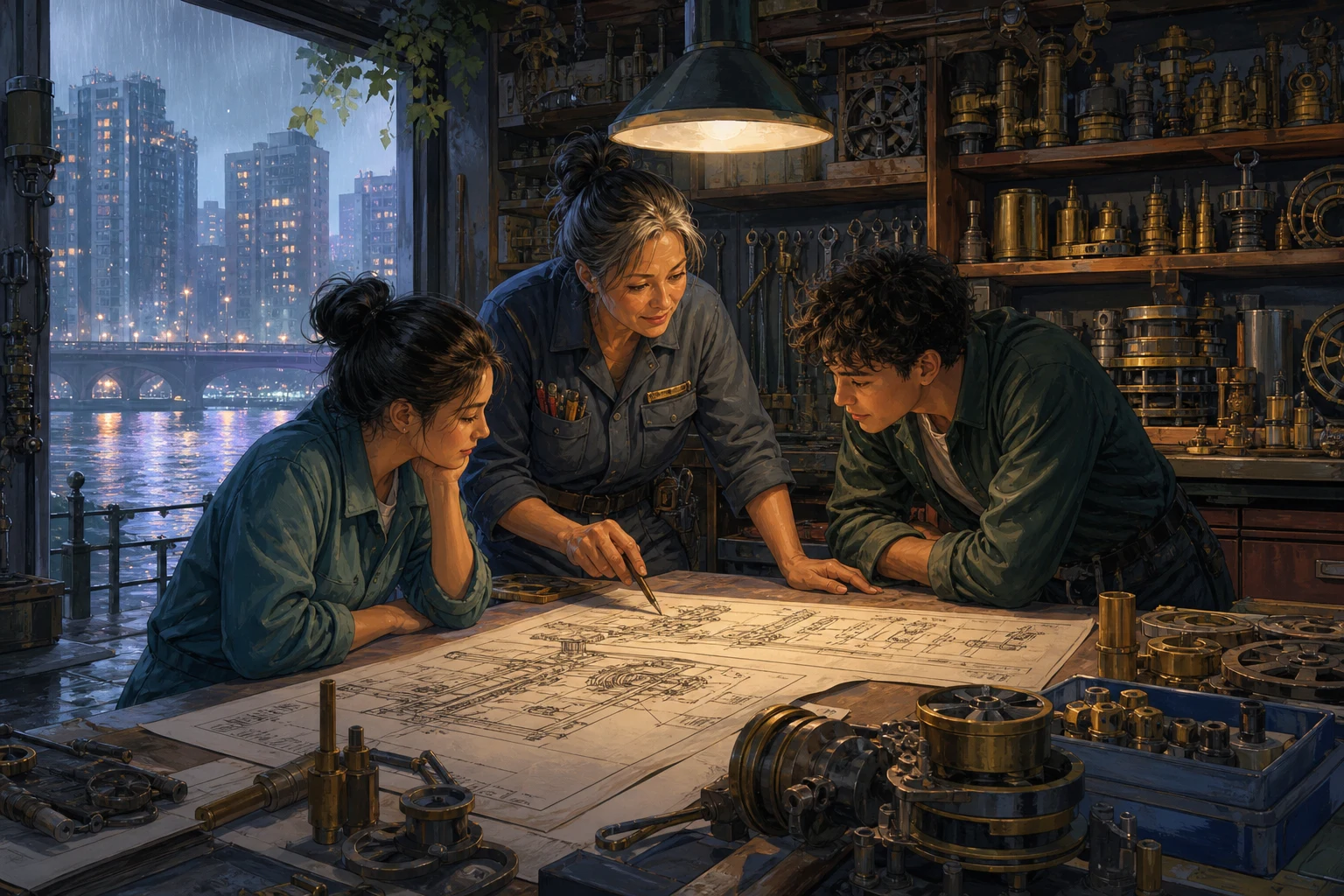
A Manual for the Moving World
Belen could fix an elevator by listening to its silence. Teaching someone else required her to explain the noise.
Read Story →