
Quote Stories
Light Through the Practice Glass
Belen learns that a careful craft can make room for more than one pair of hands.
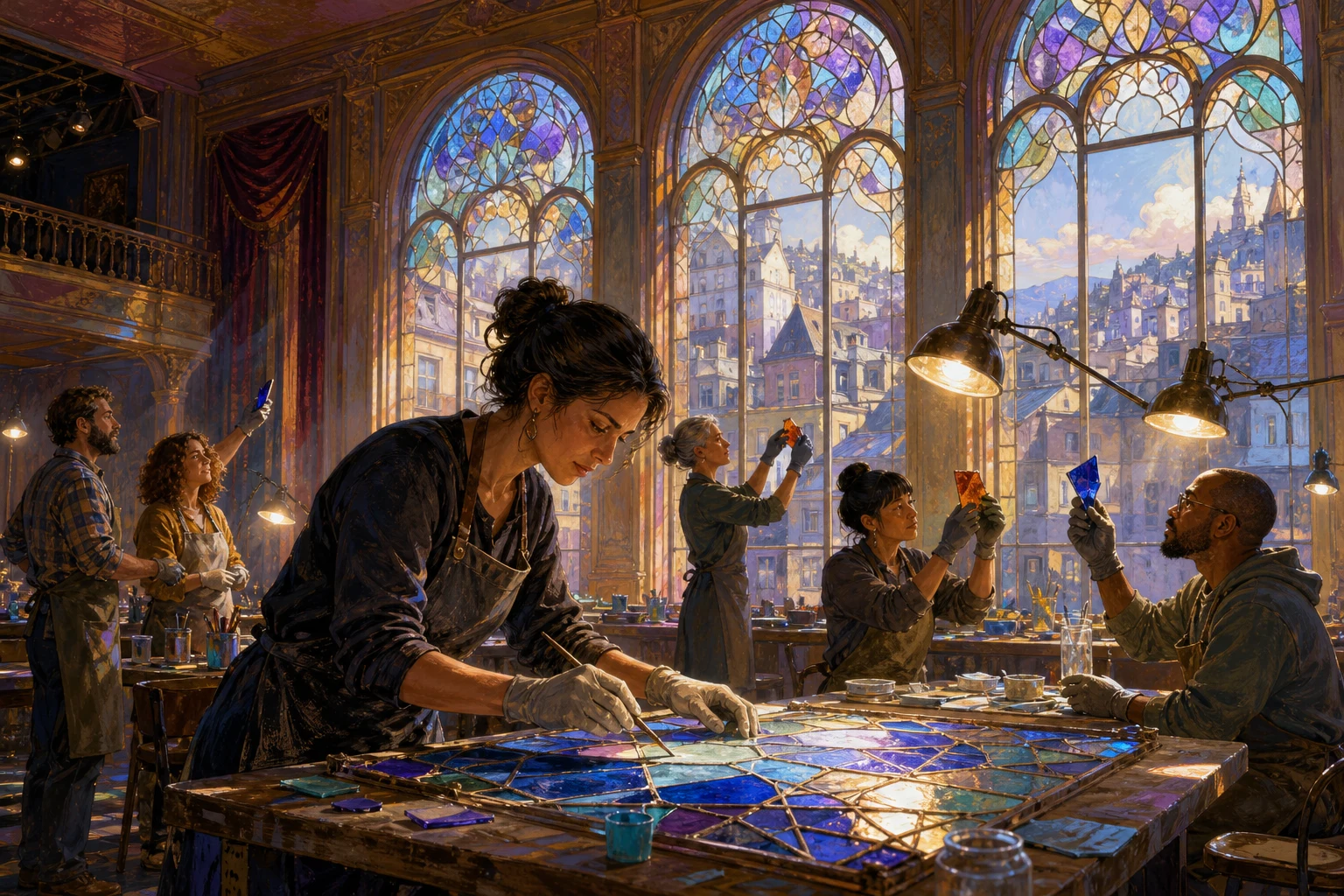
Belen trusted glass more than people.
Glass showed every flaw immediately. A streak caught the morning sun. A loose lead line announced itself with a faint rattle. A colored pane, cleaned properly, seemed to hold its own small weather: blue as high air, amber as late afternoon, green as rain on stone.
People were less dependable. They hurried. They guessed. They touched things with unwashed hands.
That was why Belen worked alone.
For seven years, she had cleaned and repaired windows across the steep streets of Valdarra, carrying her ladder on one shoulder and her tools in a red canvas case. She knew which stairways caught the first light and which old balconies shook when the evening cable trams passed below. She also knew that if she opened a restoration business, every mistake would have her name on it.
Then the Maravilla Theater called.
“We need the tall windows ready before the play,” said Ivo, the theater’s lighting technician. “The children have been rehearsing beneath them for two months.”
Belen looked through the theater’s foyer at the three arched windows. Years of dust had dimmed their colors. One panel had cracked near the top; another leaned in its frame like a tired shoulder.
“When is the first performance?” she asked.
“Ten days.”
Belen looked again. Ten days was too short. It was also exactly long enough to make refusal feel like fear.
“I’ll do it,” she said. “But I work alone.”
Ivo smiled without arguing. “Of course.”
On the first evening, he brought a folding table, two bright work lamps, and a box of spare glass. Several theater volunteers arrived behind him. A costume maker named Sena carried cloth gloves. A retired math teacher brought a magnifying lens. Two actors still wearing rehearsal makeup wanted to help after practice.
Belen placed the original panes on the table.
“Restoration begins with patience,” she said. “Not enthusiasm.”
“We have both,” said Ivo.
She gave him a look. He adjusted the lamp.
For two nights, Belen measured, cleaned, and explained. She allowed the others to sort fragments but not touch the leadwork. When Ivo asked whether he could try fitting a narrow blue piece, she said, “Not yet.”
On the third night, she was called away to inspect a window on the upper landing. When she returned, Ivo had fitted the blue piece. It sat neatly in place, but the glass beside it was the wrong shade. Under the lamp, the restored section looked uneven—one blue like deep water, the other like watered milk.
Belen went still.
“The whole panel may have to come apart,” she said.
Sena removed her gloves. “Can we fix it?”
“Perhaps.”
“Then why are you looking at us as if we broke the theater?”
Belen heard the sharpness in her own voice. “Because this is not a rehearsal.”
“No,” Ivo said quietly. “It’s a workshop. You just haven’t let it become one.”
The sentence followed Belen up the theater stairs. Through the high windows, Valdarra’s lights climbed the mountain in crooked lines. Every window in the city held a different reflection. None of them showed the whole city alone.
The next evening, Belen carried six sheets of spare glass into the foyer.
“We’ll test patterns,” she said. “No one touches the original panel until we understand what we’re doing.”
She drew grids with a wax pencil. The volunteers mixed colored films, compared fragments, and held pieces against the changing light. The actors discovered that a warm amber beside a pale green made both appear brighter. The math teacher calculated angles. Sena arranged the test pieces into a pattern that looked, to Belen, like a row of windows opening onto dawn.
Belen did not praise it immediately. She studied it, then moved one piece two millimeters to the left.
“Now,” she said, “try looking again.”
The group leaned over the table.
“It changed,” said Ivo.
“Light changes,” Belen replied. “That’s why we test.”
Soon the theater stayed open late each night. Rehearsals ended, costumes were hung, and the foyer filled with the soft scrape of tools. Belen taught people how to clean without clouding old glass, how to hold a fragment by its edges, how to notice a hairline crack before it became a break.
She also learned things. Ivo understood how color behaved under stage lamps. Sena knew which shades made the painted scenery glow. The actors noticed what the audience would see from the back row. Even the youngest volunteer, a quiet boy named Ren, found that he could identify a loose piece by sound before anyone else could.
On the ninth night, the final arch went into its frame.
It was not perfect. One red fragment had a faint ripple. The repaired blue section was still slightly different from its neighbor. Belen could have hidden both flaws by replacing more of the old glass, but she left them.
When the lamps came on, the windows filled the foyer with blue, amber, green, and red. The imperfect pieces caught the light instead of losing it. Colored shapes spilled across the floor, reaching the ticket desk, the worn benches, and the shoes of everyone who had helped.
Belen stood beneath the arch while the theater director handed her an envelope.
“For the restoration,” he said. “And for the next one, if you’re willing.”
Belen glanced at the folding tables. The volunteers were already gathering the spare glass into labeled boxes.
“I’m willing,” she said. “But I’ll need to change the arrangement.”
The director raised an eyebrow.
“I’m opening a workshop,” Belen said. “People can learn the work. Properly.”
Ivo nodded toward the glowing windows. “And if they make mistakes?”
Belen looked at the red fragment, shining like a small captured sunset.
“Then we test,” she said. “We learn what the light does.”
A week later, a new sign appeared above a courtyard door: BELEN ARDAS — GLASS RESTORATION AND NIGHT CLASSES.
The first class filled quickly. Belen still checked every measurement. She still disliked fingerprints. But now, when evening came, another pair of hands reached for the work, and the light had more places to pass through.
Related Quote Stories
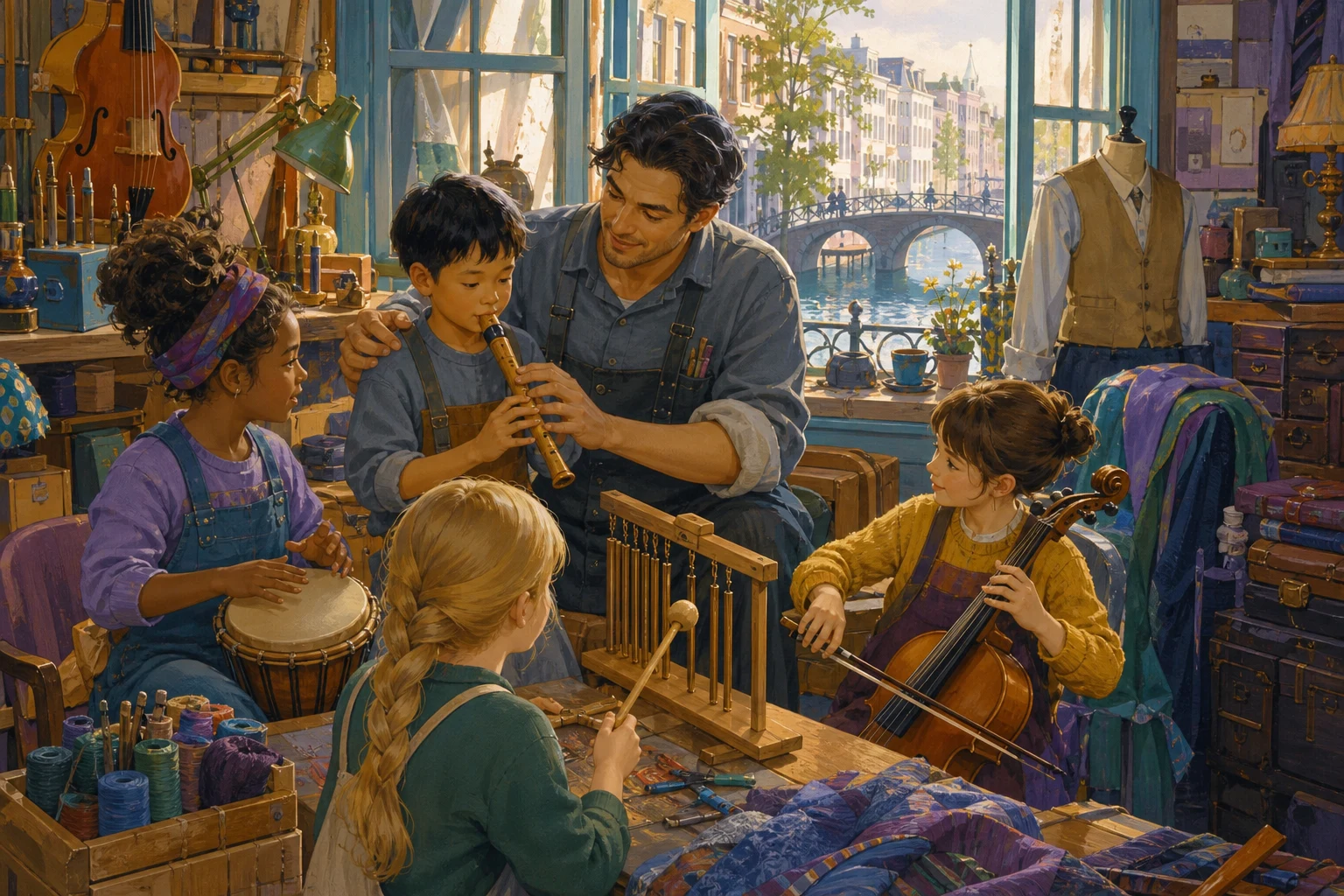
What the Broken Notes Were Saying
Daro had replaced the recorder’s cracked mouthpiece twice. It still squeaked like a startled pigeon. The child holding it knew why.
Read Story →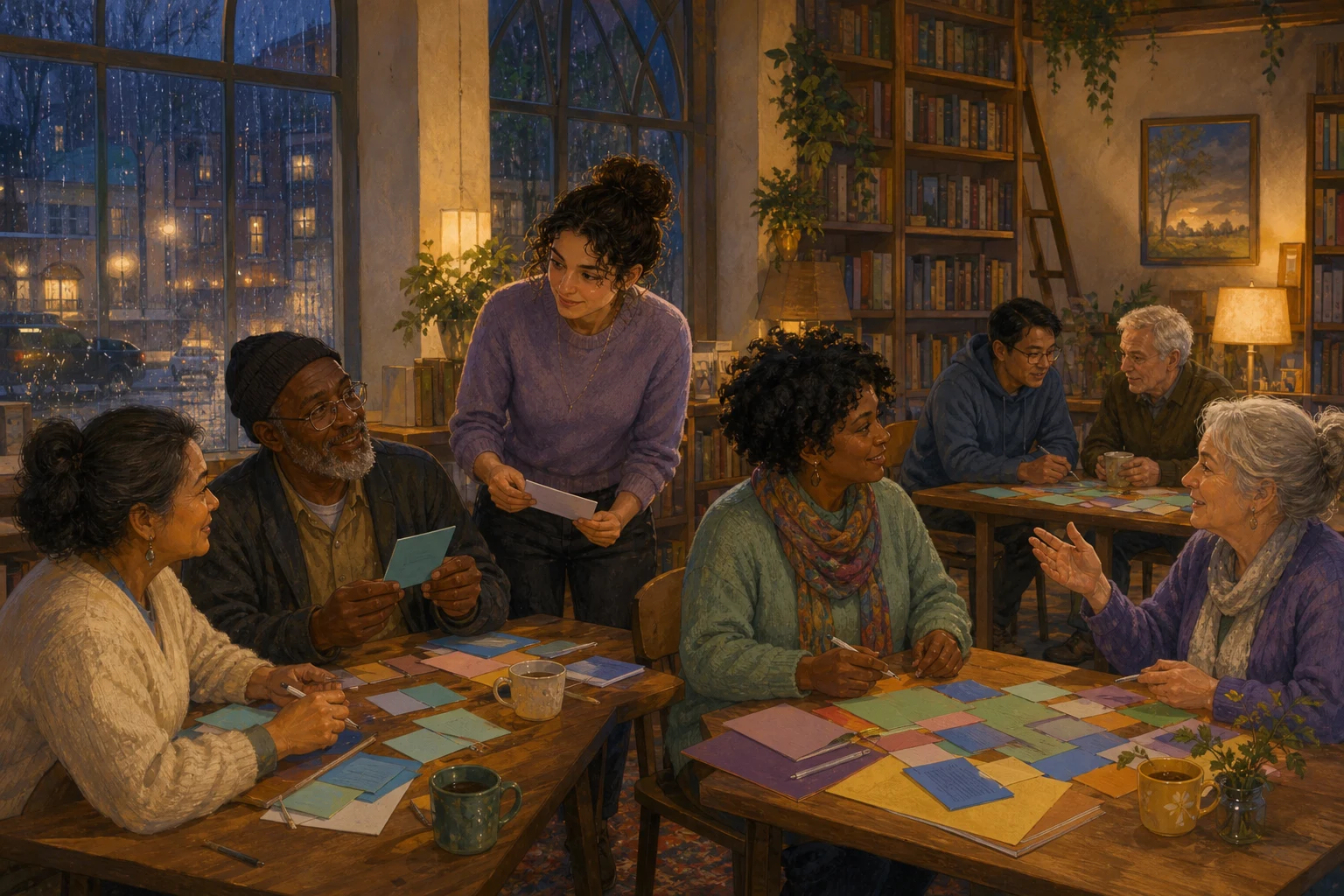
Forms with Room to Breathe
A legal clerk who once answered every question discovers that the best guidance leaves people ready to answer one another.
Read Story →
Where the Ground Remembers
When the community garden’s old map stops matching the shifting marsh soil, Yara discovers that the best plan is not a finished picture but a conversation that can keep changing.
Read Story →