
Quote Stories
Where the Ground Remembers
Yara redraws a garden by listening to every patch of earth—and everyone who knows it.
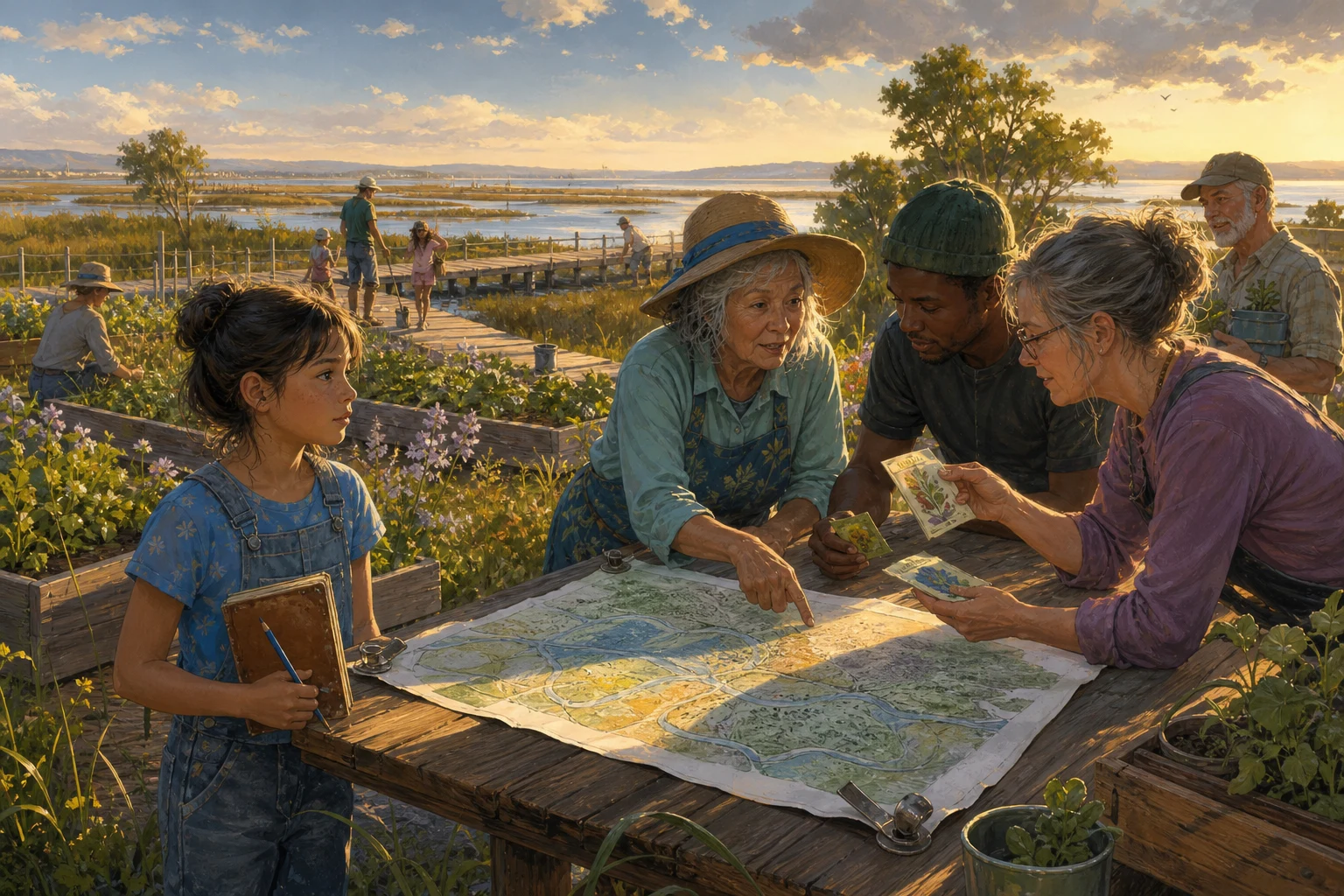
Yara’s blue pencil snapped through the paper.
She had drawn the garden exactly as it appeared on the wooden sign: four straight beds, two narrow paths, a rain barrel, and a sunny corner reserved for tomatoes. But the sign showed tomatoes where only pale reeds now grew. The bean bed had become damp and salty. The patch labeled “shade” baked beneath an open stretch of sky.
Yara crouched beside the fence and pressed her fingers into the soil. It glittered with salt.
“I can fix this,” she told the empty garden.
By afternoon, she had made a new map. She moved the beds, widened the paths, and added arrows showing where the tide sometimes reached after heavy rain. It looked clever enough to hang in the market hall.
Then she showed it to Mr. Sol, who grew herbs beside the tool shed.
“Your mint does not know it belongs there,” he said.
Yara frowned. “Plants don’t read maps.”
“Exactly.”
Next she found Auntie Nessa tying stakes around her onions. Nessa pointed toward a low strip near the boardwalk. “That ground dries first when the wind comes from the inlet.”
At the rain barrel, twins Lio and Luma explained that puddles lingered beneath the old fig tree, even when the surface looked dry. A retired boatbuilder remembered which bed had flooded during the great autumn storm. The market baker knew which gardeners traded seeds because certain varieties handled salty soil better.
Every person offered a different piece. Some memories disagreed. Yara’s neat map grew crowded with notes, circles, arrows, tiny tide marks, and question marks.
For three evenings, she tried to force all the information into one final drawing. Each version failed. When she moved the dry areas, the sheltered areas no longer fit. When she solved the salt problem, she erased the paths people actually used.
At last, Yara carried her papers to the garden table.
“What if the map is allowed to be unfinished?” she asked.
The gardeners leaned closer.
Yara replaced the wooden sign with a large sheet divided into three kinds of marks: what people had observed, what they were testing, and what still needed watching. Salt was colored silver. Dry ground was yellow. Sheltered ground was green. Small clips held removable cards beside each bed.
“Then we can change it without pretending we were wrong,” said Mr. Sol.
They planted according to the new map. Not everything grew. The tomatoes struggled, the beans produced only a few handfuls, and a sudden tide washed away half the seedlings near the western fence.
On harvest day, the baskets looked disappointingly light.
Yara stood beside them, her stomach tight. She had hoped the map would make the garden abundant. Instead, it had made the gardeners notice how much they still did not know.
Auntie Nessa lifted a small basket of hardy greens. “These survived where my onions failed.”
Mr. Sol brought mint cuttings from his sheltered corner. Lio and Luma offered seeds saved from the strongest beans. The boatbuilder sketched a new drainage trench. At the market, the baker promised to trade compost for next season’s herbs.
Soon the table held more than vegetables. It held seed envelopes, penciled observations, and plans with blank spaces waiting for weather, water, and experience.
Yara took out a fresh sheet.
“Should I draw the whole garden again?” she asked.
“Draw the places we haven’t tried yet,” said Nessa.
So Yara did. She left room for change, and this time, she did not draw alone.
Related Quote Stories
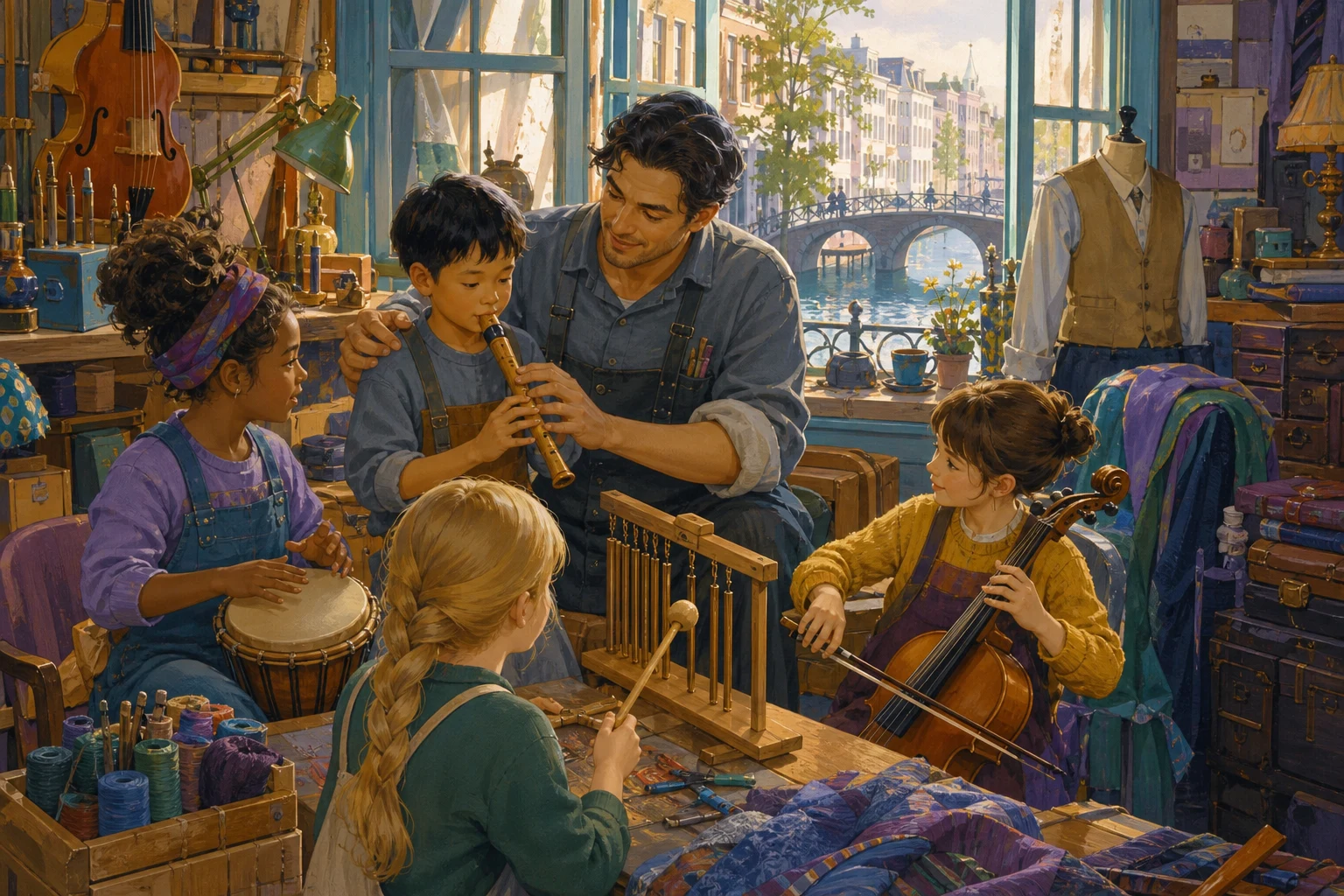
What the Broken Notes Were Saying
Daro had replaced the recorder’s cracked mouthpiece twice. It still squeaked like a startled pigeon. The child holding it knew why.
Read Story →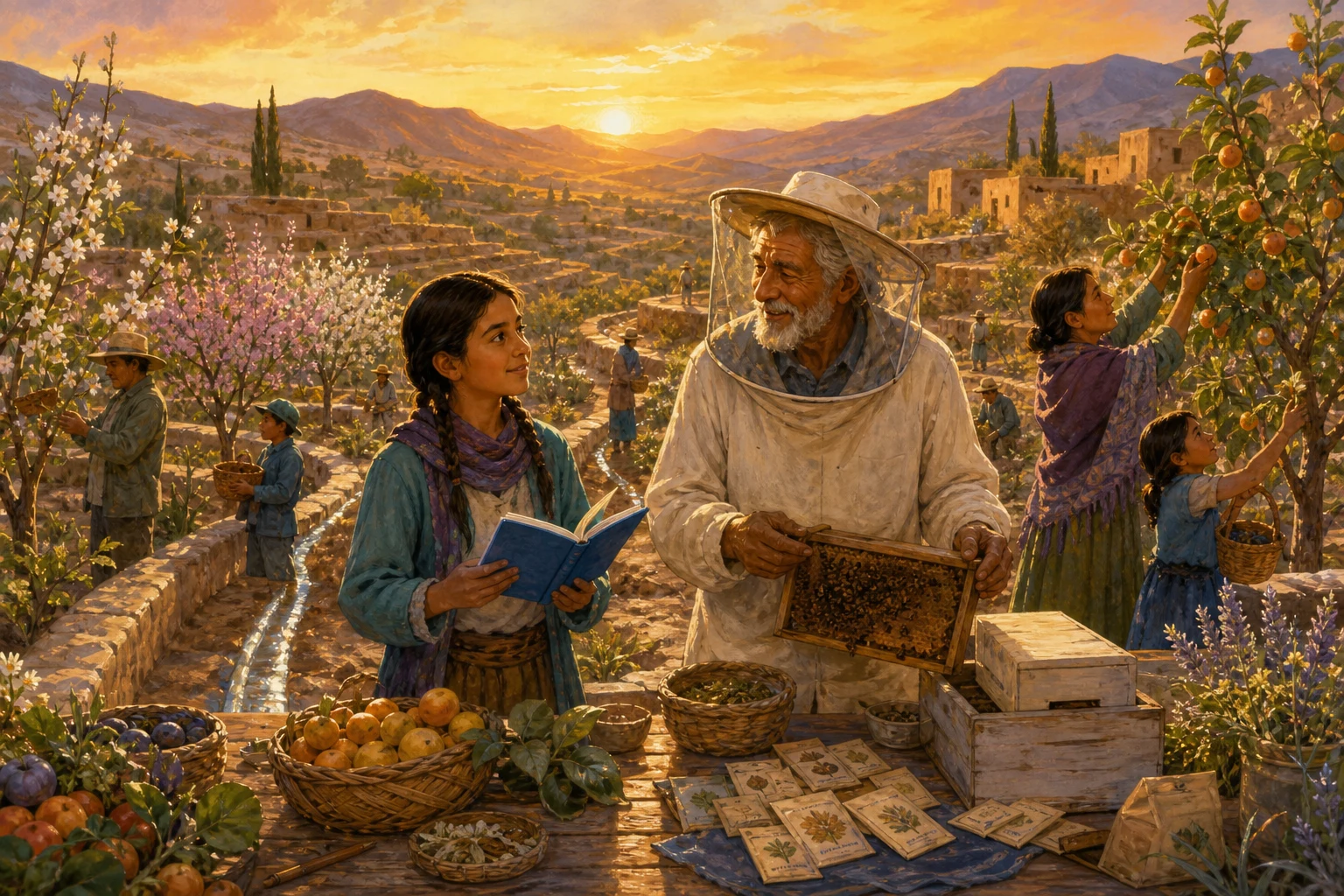
A Calendar for Every Tree
Amaya thought a good seed keeper should notice everything. By midsummer, she had noticed too much to manage alone.
Read Story →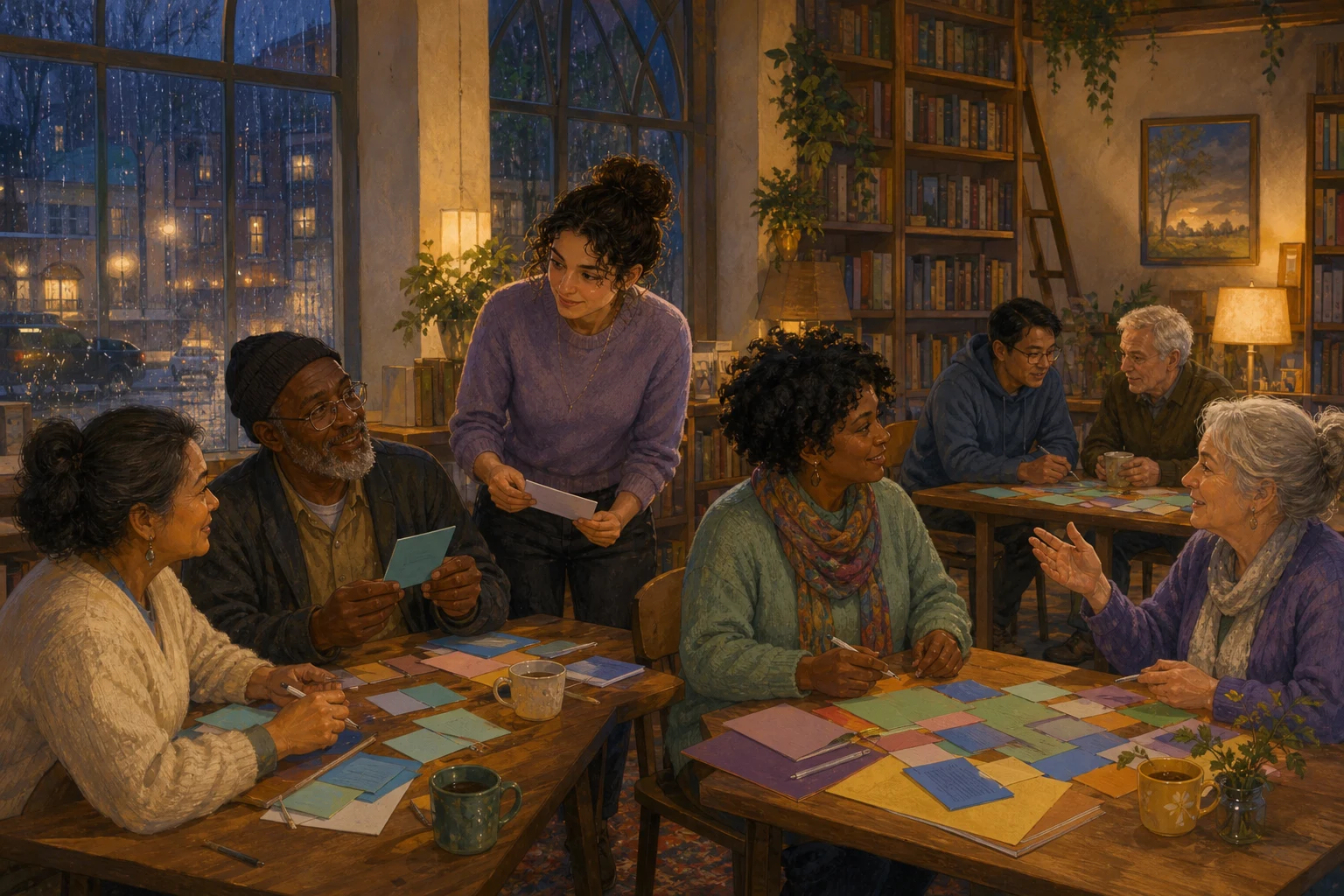
Forms with Room to Breathe
A legal clerk who once answered every question discovers that the best guidance leaves people ready to answer one another.
Read Story →