
Quote Stories
Wind Finds a Wider Way
Jo’s kite contest takes an unexpected turn above the salt grass.

Jo found the spool beneath a stack of winter blankets, where the attic smelled of cedar, dust, and the faint saltiness that clung to everything near the shore.
Her grandmother turned it over in her hand. The wood was smooth from years of use, and a faded blue thread still wound around it.
“Your great-grandfather used this when he repaired sails,” she said. “It may still know something about wind.”
Jo decided it would help her win the school’s handmade kite contest.
For three evenings, she worked at the kitchen table. She stretched thin paper over a bamboo frame, painted a silver fish along the center, and tied the blue thread to the tail. When she finished, the kite looked fast even while resting against the wall.
At recess the next morning, Jo carried it to the salt-grass field behind the school. Her classmates had brought kites shaped like moons, birds, and one lopsided vegetable. Younger children watched from the fence, waiting for the afternoon contest.
Jo’s kite rose almost immediately. It climbed above the bell tower, flashed in the sun, and pulled the spool so hard that Jo had to brace her shoes in the grass.
“Look!” she called.
Everyone did. For a moment, the field belonged to her.
Then the contest helpers began clearing a launch area. The younger children were told to stand behind the rope. Jo heard one boy ask whether he could try flying her kite after the judging.
“No,” she said, tightening the line. “It took me three days.”
The boy’s face fell. Around him, other children lowered their kites. The field grew strangely quiet beneath all that bright paper.
Jo noticed, but she did not know what to do with the noticing. She had wanted the judges to see her work, not a crowd of hands reaching for it.
That afternoon, the wind changed. It softened, then wandered. Kites dipped and collapsed. The silver fish circled once and dropped into a patch of grass.
Jo yanked the line in too quickly. The frame twisted. One bamboo spar snapped.
She sat beside the broken kite, hot with disappointment. Her grandmother’s spool rolled away and stopped against a child’s shoe.
The boy from the fence picked it up. “It’s still pretty,” he said.
“It doesn’t fly anymore.”
“Maybe it needs more than one person.”
Mara, who had been measuring wind with a strip of ribbon, crouched beside Jo. “The air is moving lower today,” she said. “Near the ground, it’s coming from different directions.”
Another classmate, Dev, unrolled a paper covered in little arrows. He had been recording the wind since lunch. “We could make stations,” he suggested. “One for building, one for watching the weather, and one for flying. People could switch.”
Jo looked toward the fence. The younger children were still holding their folded kites.
“What would the contest be?” she asked.
“Not who owns the best kite,” Mara said. “Which team can get the most designs into the air?”
Jo studied the broken spar. She could repair it herself, but the thought no longer felt satisfying. Instead, she handed the kite to the boy who had found the spool.
“Can you hold this while I tie it?” she asked.
Soon the field became busy again. Children compared tail lengths and traded scraps of paper. Dev called out gusts. Mara drew arrows in the dirt. The youngest participants decorated the launch flags, giving each one a name: Gull, Storm Bean, Blueberry, and Captain Wobble.
Jo showed two children how to brace a frame with crossed sticks. They showed her that a kite could fly with a crooked wing if its tail was long enough.
When the final round began, the wind remained stubbornly calm. Only three kites rose higher than a person’s head. One of them was Jo’s repaired fish. It trembled, sank, and then lifted again when six children ran together across the field, feeding line into the soft air.
No one shouted Jo’s name. They shouted everyone’s.
The judges awarded a ribbon for the highest kite, another for the cleverest design, and a broad yellow one for “Best Shared Flight.” Jo’s team received the last ribbon. It was tied to the old sailmaker’s spool.
At home, Jo placed it on the kitchen table. Her grandmother touched the ribbon and smiled.
“Looks like the spool remembered something after all.”
Jo looked out toward the darkening field, where a few children were still practicing with their small, stubborn kites.
“It remembered that wind is easier to find when nobody keeps it to themselves,” she said.
Related Quote Stories

After the Last Bus
Rafiq could make a dead radio speak again. Explaining how was another matter.
Read Story →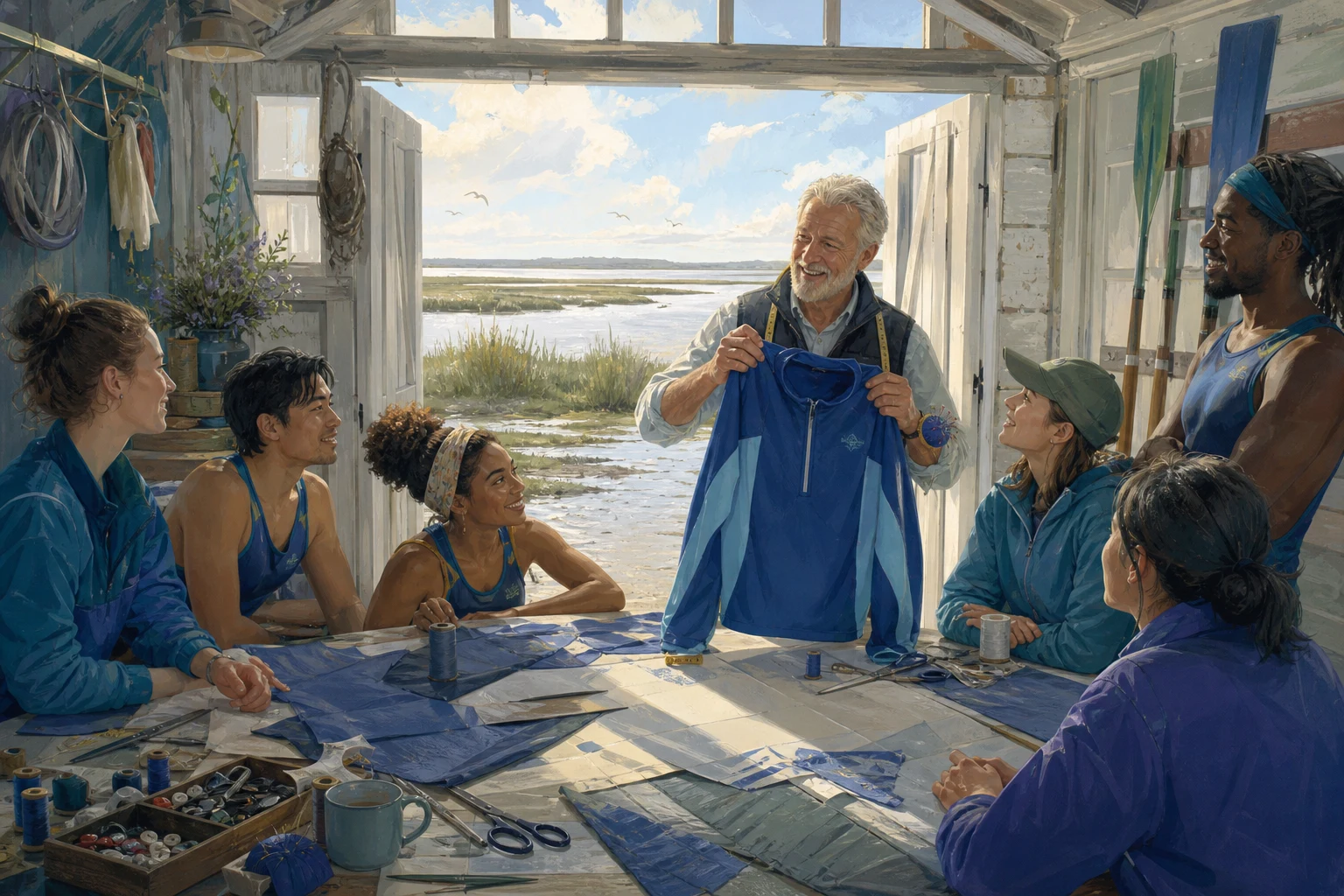
Room to Row
Dev had measured every rower by the same pattern. On the water, the pattern failed them. His answer began with a notebook, a bundle of surplus cloth, and the humility to watch before cutting again.
Read Story →
Light for the Listening
Mara wants one perfect exhibit. The lanterns she finds under an old theater floor teach her to make room for many voices.
Read Story →