
Quote Stories
When the Airwaves Remembered
Lenora learns that a voice need not be perfect to make room for others.

The red recording light made Lenora forget every word she had ever known.
She had entered the radio workshop carrying three index cards, a thermos of tea, and the firm intention of saying as little as possible. The cards held weather notices: frost before dawn, wind from the west, roads slick near the grain elevators.
“Take your time,” said Milo, the young sound engineer behind the mixing board.
“I am taking it,” Lenora replied. “Unfortunately, time is taking me.”
Milo laughed, and Lenora managed the first notice. Her voice sounded thinner through the headphones than it did in her kitchen. Still, it reached the town’s handful of receivers that afternoon.
For several weeks, she read the weather. Then Milo found her humming while she waited for the microphone to warm up.
“What song is that?” he asked.
Lenora stopped humming. “Nothing important.”
“It sounded important.”
She told him it was a lullaby her mother had sung while mending school uniforms. Lenora had spent thirty years as a school custodian, and she remembered songs the way she remembered classrooms: by the people who had filled them. One verse belonged to a winter evening. Another had been learned from a neighbor who stirred soup with a wooden spoon.
Milo searched the station’s old tapes. There were no recordings of the lullaby, but there were callers who recognized it.
A retired bus driver knew the opening. A baker remembered a verse about swallows. Two sisters disagreed about the ending and sang over each other until they began laughing. Someone mailed in a melody played on three drinking glasses.
Lenora wrote everything down in a green notebook.
Soon the weather notices became introductions. On Thursday evenings, Lenora invited one person into the studio. Nobody was required to sing. They could whistle, tap a jar, tell where they had first heard a tune, or simply listen while someone else tried a remembered line.
The first proper broadcast went badly. Lenora lost her place, Milo played the wrong tape, and a wind chime fell off a shelf during the quietest verse. Lenora wanted to erase the whole hour.
Instead, Milo played the chime again.
“It belongs now,” he said.
The following week, a group of children arrived with spoons from their kitchens. They tapped different rhythms beneath Lenora’s lullaby. An older neighbor supplied a verse no one else knew. A teenager who claimed not to like old songs adjusted the microphone so gently that every breath became audible.
Lenora began to understand that the program did not need a polished performance. It needed a door left open.
By spring, people were sending notes to the station: a tune for milking time, a marching rhythm remembered from a school play, a song with no known words that everyone recognized anyway. Lenora visited basements, porches, and county-fair stalls with her green notebook. She learned to ask, “What do you remember?” before asking, “Can you sing it?”
On the night of the final winter broadcast, Lenora sat before the microphone with no index cards at all. Outside, snow moved across the streetlights. Inside the studio, Milo lowered the music and waited.
Lenora began the lullaby alone. Her voice trembled on the first line. Then the bus driver joined through the telephone connection. The two sisters supplied the disputed ending. Children tapped spoons in careful time. Somewhere, someone played the drinking glasses.
The song did not become perfect. It became full.
Afterward, Lenora removed her headphones and looked at the dark studio window. She had expected applause, but radio offered no visible audience. Only the small red light, still glowing, and the knowledge that hundreds of quiet rooms had heard one another for a little while.
Milo handed her the green notebook.
“Same time next week?” he asked.
Lenora opened it to a blank page. “Bring a bigger microphone,” she said. “We have more voices coming.”
Related Quote Stories
What the Broken Notes Were Saying
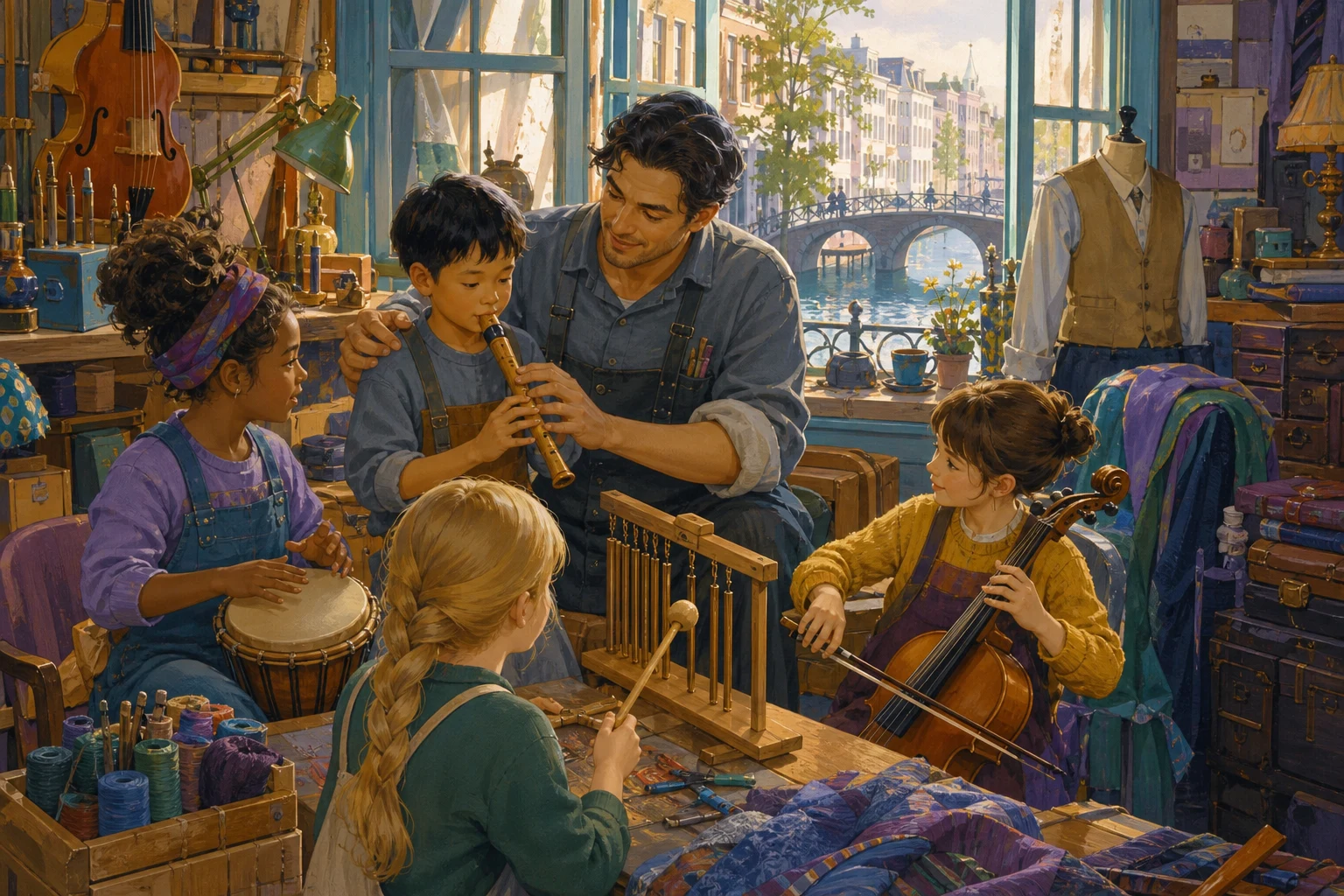
Daro had replaced the recorder’s cracked mouthpiece twice. It still squeaked like a startled pigeon. The child holding it knew why.
Read Story →
Keep the Kites Close
Ema wants to rescue her town’s kite festival with one daring flight. Instead, listening to her neighbors leads her toward a celebration that belongs to everyone.
Read Story →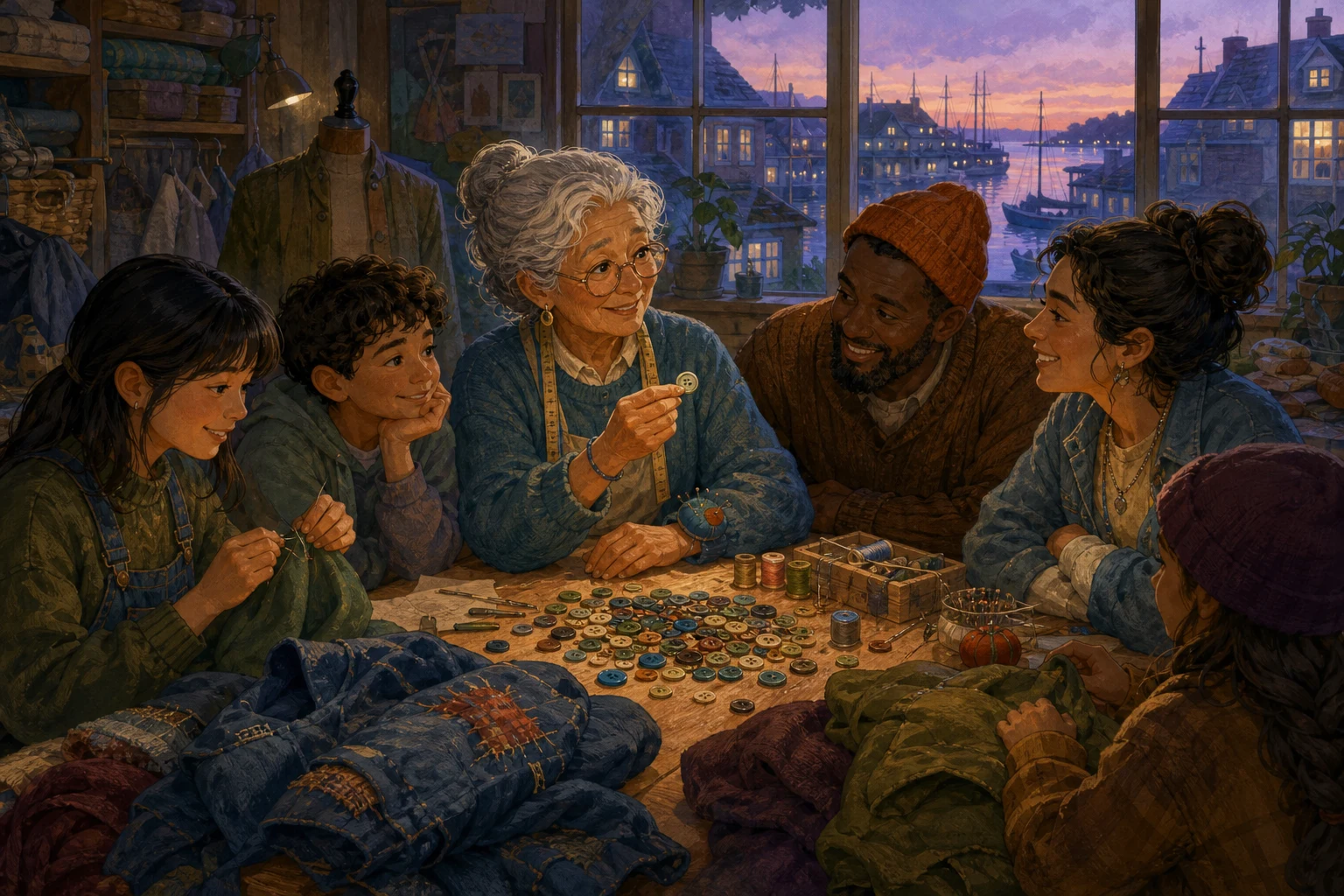
A Pocketful of Repairs
When a delivery rider brings Mara a jacket held together by mismatched buttons, the retiring tailor begins one last project: teaching the whole district how to mend what still has life in it.
Read Story →