
Quote Stories
What the Hillside Knew
Amara’s map was accurate. The orchard required more than accuracy.
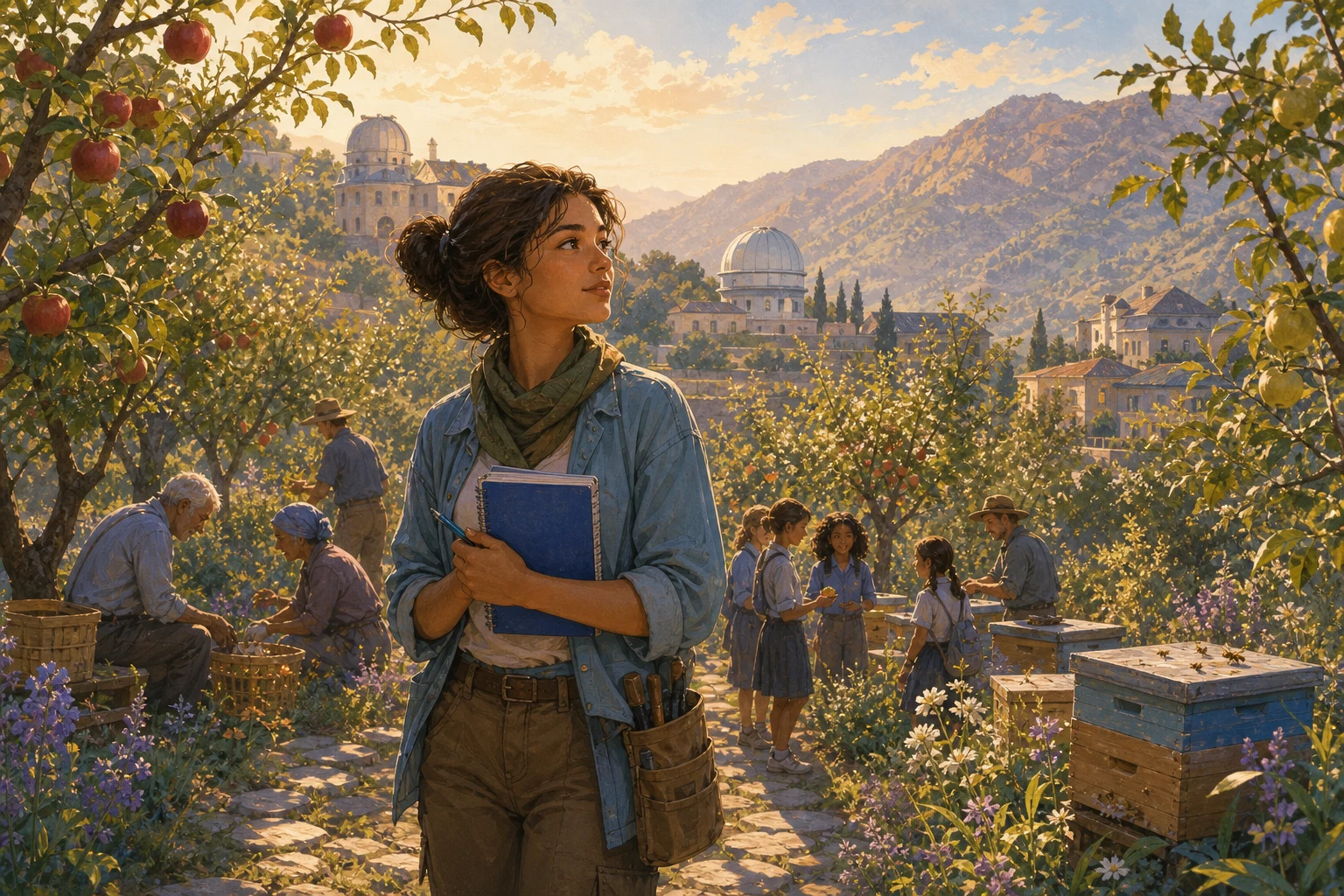
The first trees died in a pattern so neat that Amara blamed the roots.
She stood among the brown saplings with her survey notebook open, its pages crowded with slope angles, soil readings, drainage estimates, and a planting plan she had presented three weeks earlier to the orchard cooperative. Below her, the university roofs caught the late-afternoon sun. Above her, the ridge disappeared into cloud.
“We followed the map,” said Tomas, who kept bees near the old stone wall.
Amara looked down at the rows. Every tree had been planted at the recommended distance. Every irrigation tube ran where she had marked it. On paper, the orchard was orderly.
In the ground, it was failing.
She spent two days checking her measurements. The soil was not poisoned. The water was reaching the roots. Nothing in the data explained why the trees on the lower slope had wilted first while three neglected saplings near the wall remained green.
On the third morning, a group of schoolchildren arrived with their teacher to collect fallen apples from the old trees. One girl, Nia, stepped over the irrigation line without looking at it.
“Why do you put the trees there?” she asked.
“Because that section gets the best light.”
Nia pointed toward the wall. “Not in the morning. The shadow stays there until the bell at school rings.”
Amara turned. The wall’s shadow stretched across the lower planting beds. She had measured sunlight in hours, but not in the way people moved through the orchard—or in the way the hillside changed from hour to hour.
She began carrying a small blue notebook.
On its first page, she wrote one question: What do you notice here?
She asked Tomas where the bees flew after rain. She asked Mara, who cooked at the cider fair, which trees had fruit that kept its flavor after baking. She asked old Velan, who still sharpened pruning knives by hand, why he had left certain patches untouched for years.
“Because the wind rests there,” he said.
A week later, Amara found a narrow path worn through the grass between the old trees. It led from the stone steps to a spring hidden beneath hazel branches. People had been carrying water along that route for decades. Her planting plan had blocked it with two rows of young apple trees.
She had designed an orchard nobody could comfortably walk through.
At the next cooperative meeting, Amara unrolled her original plan and placed it on the table.
“I need to change this,” she said.
No one spoke at first. She expected resistance. Instead, Tomas leaned closer.
“Change it how?”
“Not by adding more trees. By leaving room for what is already happening.”
Together, they redrew the slope. The sunniest terraces received apples. The shaded edge became a mix of quince, currants, and herbs that could tolerate cooler mornings. The spring path remained open. They planted flowers near the bee yard and agreed on shared watering times, so no one would have to haul cans alone after dusk.
The work took longer than Amara’s original schedule. It also became more lively. Children tested shade with strips of cloth. Cooks labeled promising varieties. Beekeepers marked the hours when blossoms were busiest. Velan taught apprentices how to bend young branches without breaking them.
Amara kept asking questions, even when she thought she knew the answer.
By autumn, the orchard still looked modest. Some trees were small. The harvest filled only a few wooden crates, and several apples bore marks from wind and insects. But the fruit was sweet, and the paths were busy.
At the cider fair, the cooperative set up a table with jars of apple butter, baskets of herbs, and a hand-painted sign: Ask the Orchard.
Visitors wrote questions on slips of paper and pinned them beneath the branches. How long does a tree remember drought? Which flowers bring the earliest bees? Can a path belong to everyone?
Nia, now wearing a borrowed apron, answered the easiest ones. Tomas answered the bee questions. Velan corrected everyone’s pruning advice, including Amara’s.
Near sunset, Amara walked to the upper terrace. From there, she could see the whole hillside: the careful rows, the untidy edges, the open path, and the people moving among them with baskets and watering cans.
Her blue notebook was nearly full. On the last page, she wrote a new heading for the apprenticeship program beginning in spring:
Questions worth growing.
Then she left the notebook on the table beneath the trees, where anyone could add the next one.
Related Quote Stories
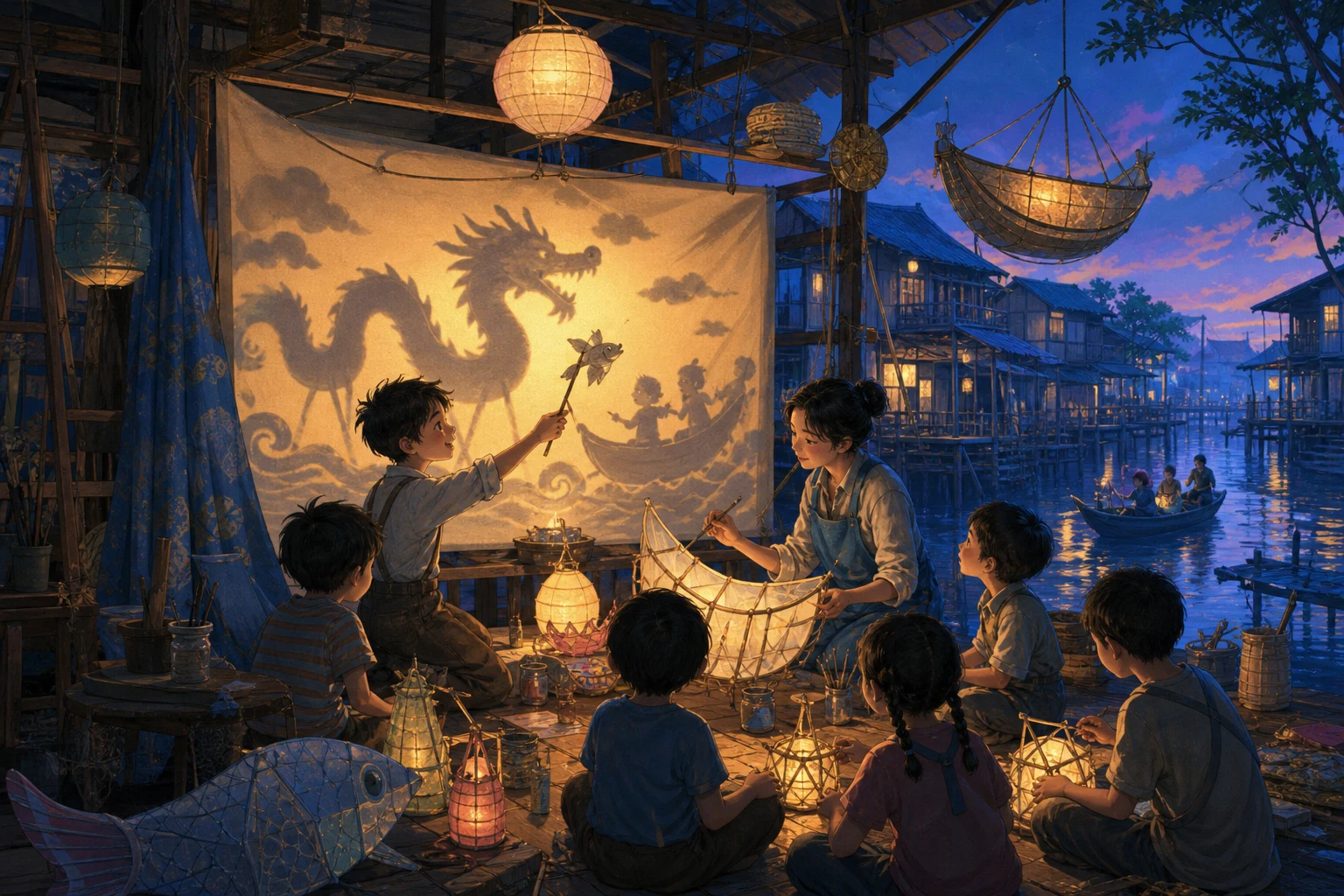
Light Finds a Way
Beni wanted applause. What he found beneath the hall’s floorboards was something better: a way for many hands to make the evening shine.
Read Story →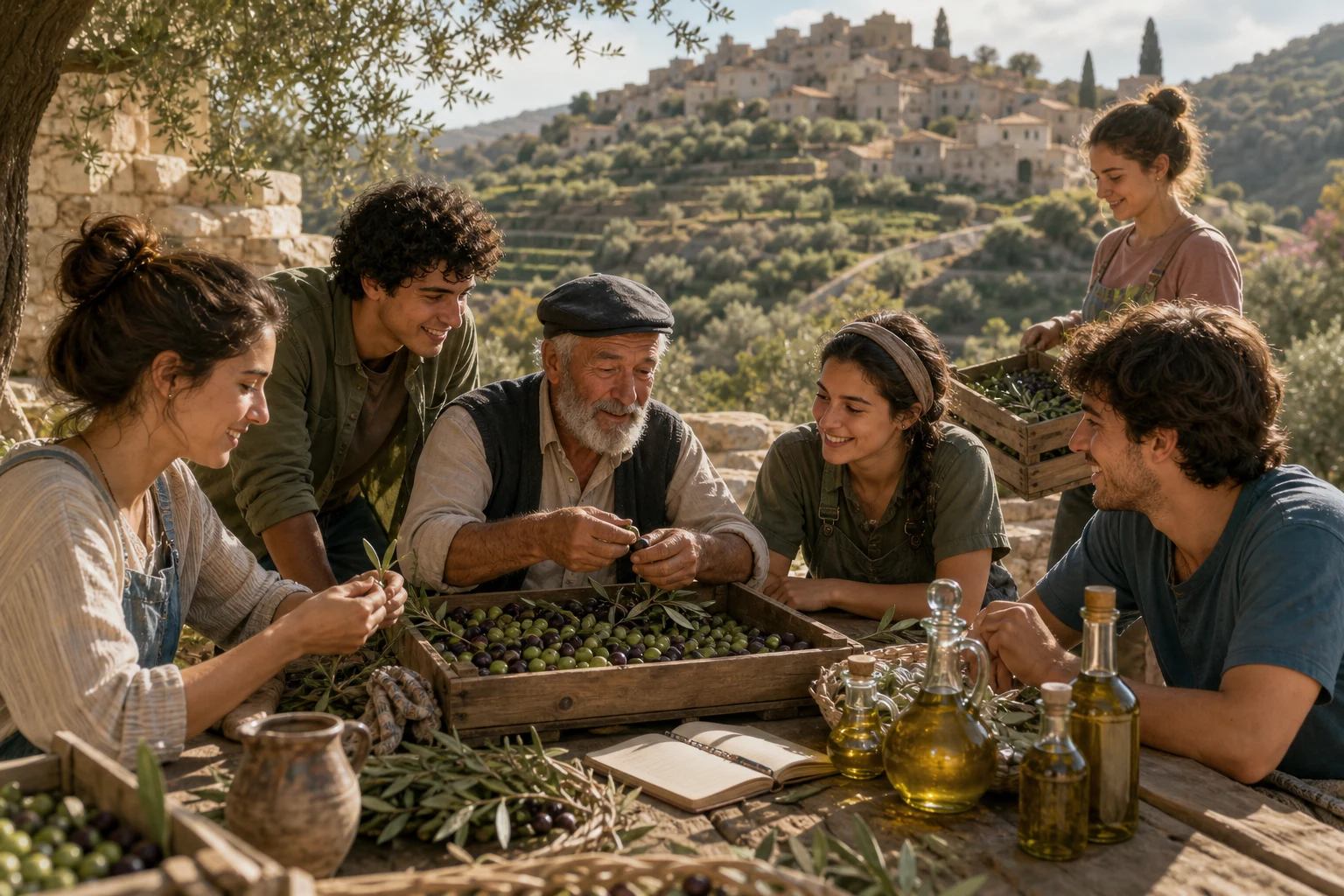
After the Last Olive
Irena intended to leave after one final harvest. Then a failed experiment, a notebook, and a roomful of young workers gave her a different reason to stay.
Read Story →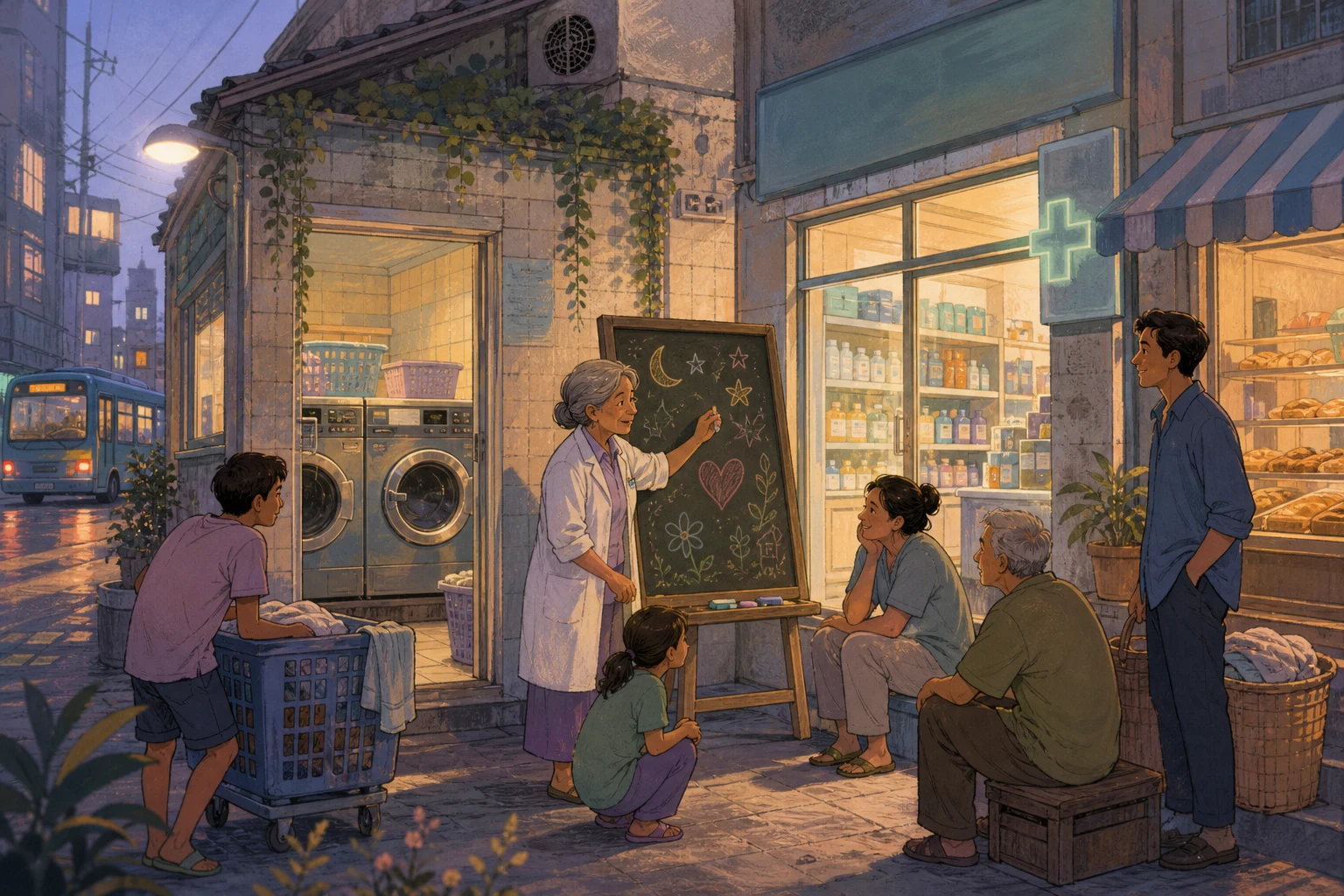
Chalk After Closing
Leila’s first neighborhood board offered everything except certainty. To make it useful, she had to learn that sharing information also meant sharing responsibility.
Read Story →