
Quote Stories
The Stop Between Clocks
Daler learns that a reliable route is built by more than one pair of hands.
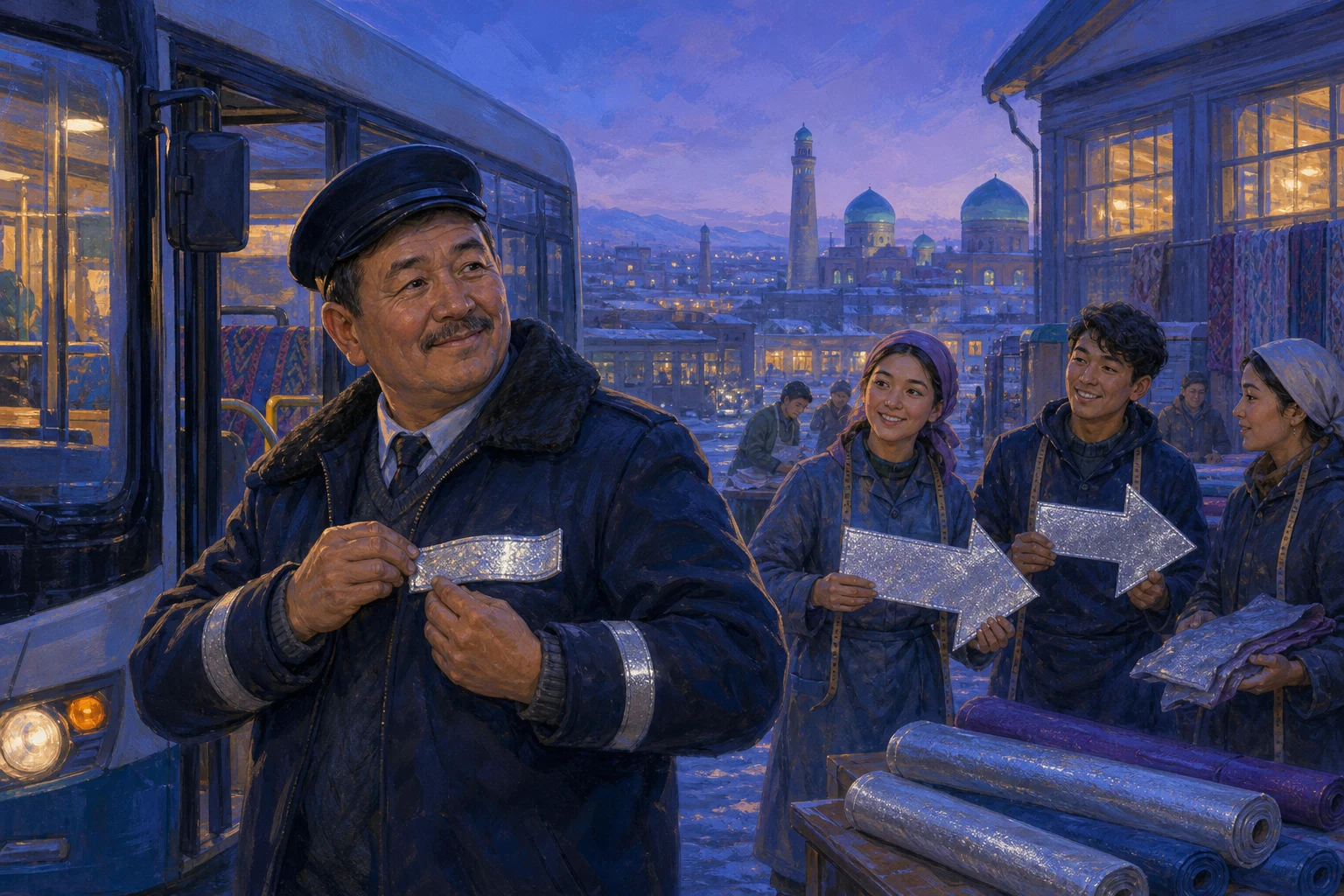
At 7:42, Daler opened the bus doors beside the textile warehouses and watched six young tailors run toward him through the blue dusk.
He waited three seconds longer than usual. Then the bus pulled away.
By the time it reached the next avenue, the apprentices were gone from the mirrors. Daler knew where they were headed: the evening tailoring institute beyond the warehouses, where they practiced buttonholes, collars, and the patient mathematics of a well-cut sleeve. He also knew the last scheduled stop came too far away.
The next night, he took the long way around.
Passengers applauded when he explained the extra stop. Then three missed connections made them late for work, a student missed an examination, and the dispatcher called him before he reached the depot.
“You cannot invent a route from the driver’s seat,” said his supervisor. “Even a kind idea needs a timetable.”
Daler went home irritated. His wife found him drawing arrows on the back of a grocery receipt.
“Ask the people who ride it,” she said.
So he did.
The following evening, instead of rushing through his usual tea, Daler sat in the depot’s break room with the dispatcher, two regular passengers, and four apprentices. They spread a city map across the table. The apprentices marked the classes they missed. A baker marked the time her first delivery left. A night cleaner circled the unlit stretch between the final stop and the institute.
The problem was not one missing stop. It was a chain of small gaps.
Together, they designed a two-week trial. Riders could request the warehouse stop by pressing a new button before the final avenue. The apprentices would make reflective fabric signs for the curb. Three nearby shopkeepers would take turns checking that the signs remained visible. Each evening, one volunteer would walk with the apprentices from the stop to the institute.
On the first night, the button was pressed too early. The bus stopped beside a tire shop, and everyone climbed out into a puddle.
“Excellent,” Daler said. “We have discovered the wrong stop.”
Even the dispatcher laughed when he heard.
They adjusted the instructions. The apprentices stitched brighter arrows. The shopkeepers traded the volunteer schedule around their closing hours. A passenger who had initially complained began reminding new riders where to press.
By the end of the trial, Daler no longer needed to slow down and search the dark curb. A silver arrow caught the headlights. The button clicked. Someone was waiting.
On the final evening, apprentice tailor Madina handed Daler a narrow strip of reflective cloth.
“For your coat,” she said. “You keep trying to walk into every problem first.”
Daler pinned it above his pocket. The strip flashed whenever he turned toward the mirror.
The route still took the same number of minutes. It simply no longer depended on one person remembering everything. At the warehouse stop, the apprentices gathered beneath the silver arrows, and the evening shifted forward together—bus, baker, shopkeepers, volunteers, and students, each carrying one manageable part of the way home.
Related Quote Stories

Keep the Lane Open
Keo knows exactly how to win a race. He does not yet know how to keep a teammate from leaving one.
Read Story →
When the Building Learned to Listen
Lidia thought quiet could be enforced until a building full of strangers showed her that peace begins with knowing what everyone else is carrying.
Read Story →
A Village Built from the Spill
Yara’s bridge falls apart just before the winter exhibition opens. What she builds afterward gives everyone a place in the design.
Read Story →