
Quote Stories
Letters in Their Own Weather
A harbor typist learns that polishing a message can sometimes erase the person inside it.
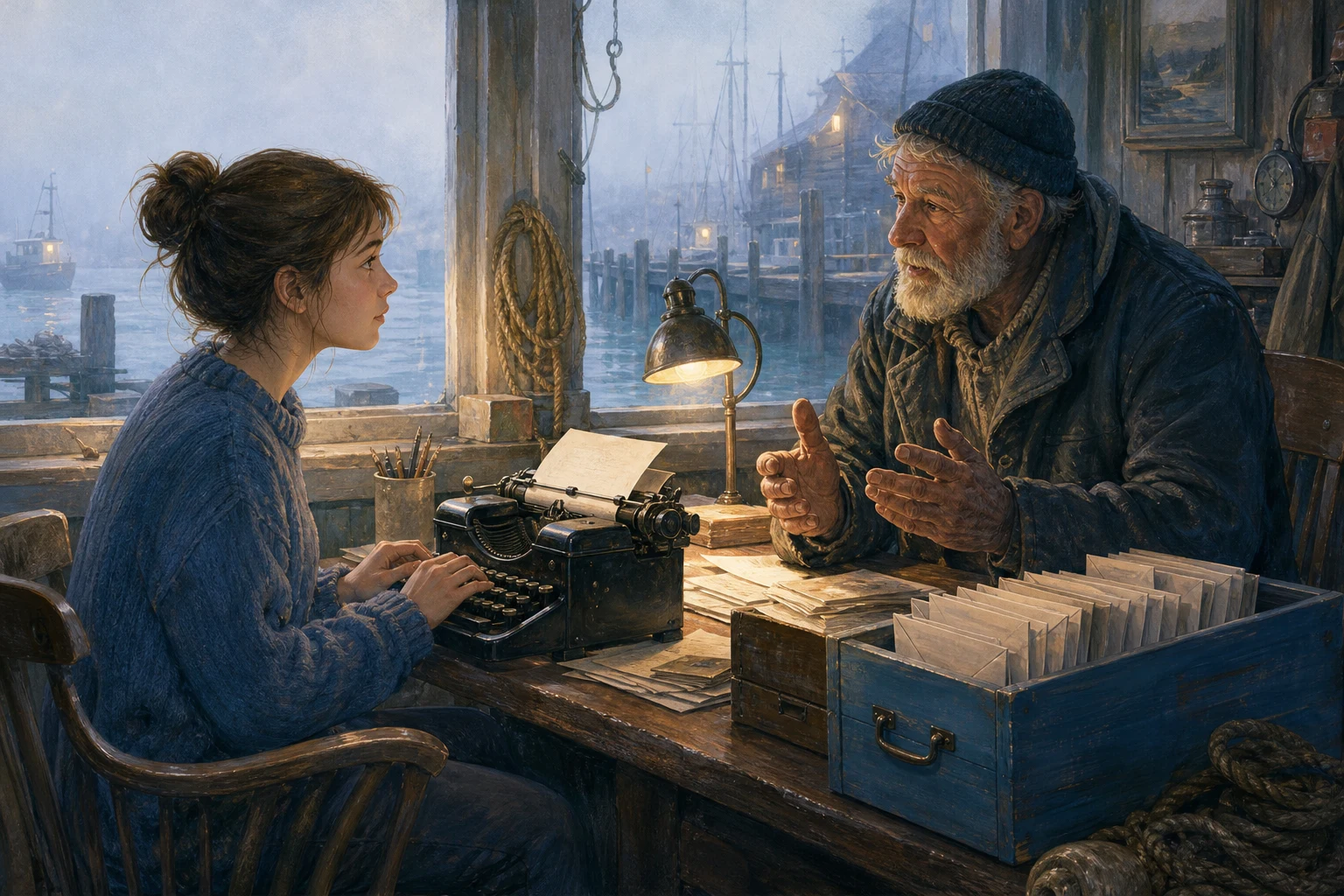
“Dear Esteemed Cousin,” Mara typed.
“Stop.”
The fisherman standing beside her desk lifted one weathered finger. “I have never called my cousin esteemed.”
Mara’s hands froze above the keys of the harbor office typewriter. Outside, the fog bell sounded once, then vanished into the white air. Ropes knocked softly against the drying shed. Somewhere beyond the window, a gull complained as if it had been personally offended by the weather.
“What would you call him?” Mara asked.
“Bram. Or you lazy old cod. Depends whether I’m apologizing.”
Mara looked at the page. Her sentence seemed tidy, respectful, and completely useless.
For three weeks, people had been leaving letters in the harbor office’s blue drawer. Most were addressed to relatives who had moved inland, across the water, or simply farther away than anyone had expected. The letters were not sent. They waited beneath the counter with stamps tucked beside them, as though their writers needed help crossing the final distance.
Mara had offered to type them because she was the apprentice typist and because she could make a page look official. Her letters had straight margins, even spacing, and no crossed-out words. They also sounded as though they had been written by a very polite committee.
After Bram took his letter home, Mara read the others.
Dear Daughter, I hope this correspondence finds you in excellent health.
Dear Brother, It has been some time since our last communication.
Dear Elsie, I regret to inform you that I miss you.
Mara winced. The last one belonged to Mrs. Pell, who sold steamed buns beside the pier and never said “I regret to inform you” about anything. She had once told a customs officer that his hat looked like a disappointed mushroom.
The next morning, Mara carried the typewriter up the steep lane to the old puppet workshop. Edrin Vale had retired from performing years ago, but his painted puppets still watched from the windows: kings with chipped noses, foxes with crooked smiles, a sailor whose wooden eyebrows made him look permanently surprised.
Edrin listened while Mara explained the problem.
“You are typing words,” he said, “but not voices.”
“I’m typing exactly what people say.”
“No. You are typing what you think people ought to say.”
Mara disliked this because it sounded accurate.
Edrin placed two puppets on the table. One was a grand queen in a velvet cloak. The other was a small, round fish with one painted eye.
“The queen speaks slowly,” he said. “The fish interrupts. If I give the fish the queen’s voice, the audience knows something is wrong before the fish opens its mouth.”
“So how do I give a letter the right voice?”
“Listen before you write.”
That afternoon, Mara changed the sign on the harbor office door.
LETTER HOURS
Bring a thought, a memory, or an apology.
Mara will type exactly what you mean.
Probably.
Bram arrived first. He paced while he spoke, removing and replacing his cap.
“Bram,” Mara said, “you called him a lazy old cod.”
“Only in the middle.”
She wrote it down.
Mrs. Pell came next and dictated three sentences, rejected two, and added a complaint about the price of pears. A boy named Tovin wanted to write to his sister at a school beyond the hills. He began with, “I hope you are learning many valuable things,” then admitted he mostly wanted to tell her that their cat had started sleeping in her empty boot.
Mara recorded every pause, correction, joke, and sudden change of subject. When she read the drafts aloud, the writers stopped her whenever a sentence sounded unlike them.
“Too grand,” said Bram.
“Too sad,” said Mrs. Pell.
“Make the cat sound more guilty,” said Tovin.
The work took longer than formal typing. It also filled the office with laughter, sniffles, arguments over commas, and the sharp metallic clack of keys. The fog seemed to gather outside just to listen.
Then, on the busiest letter hour, the typewriter jammed.
A metal arm caught between two keys. Mara tugged it free, but the ribbon tore. Ink spread across the page in a dark, wavering stripe.
“I knew this would happen,” she said. “I should have repaired it properly weeks ago.”
The room fell quiet. Six unfinished letters waited on the table.
Edrin, who had come to deliver a box of puppet eyes, picked up the damaged ribbon. “A voice is not lost because one instrument fails.”
Bram pulled a pencil from behind his ear. Mrs. Pell found a jar of blue ink. Tovin ran to the chandlery for blotting paper. Together, they tested pencils, fountain pens, and a small hand press borrowed from the print shop.
By evening, the letters were finished. They were not uniform. One was typed, one handwritten, two printed in uneven blocks, and another included a tiny drawing of a guilty cat. Each page looked different. Each sounded right.
Mara repaired the typewriter the following morning, but she kept the hand press on the office shelf.
Months later, people still came to the harbor office on letter hours. Some wrote to family. Some wrote to old friends. One man wrote to himself ten years in the future and asked Mara to keep it until he was brave enough to read it.
Mara no longer began with “Dear Esteemed.” She began with a question.
“What would you actually say?”
Then she listened until the answer sounded like the person who had come to give it.
Related Quote Stories
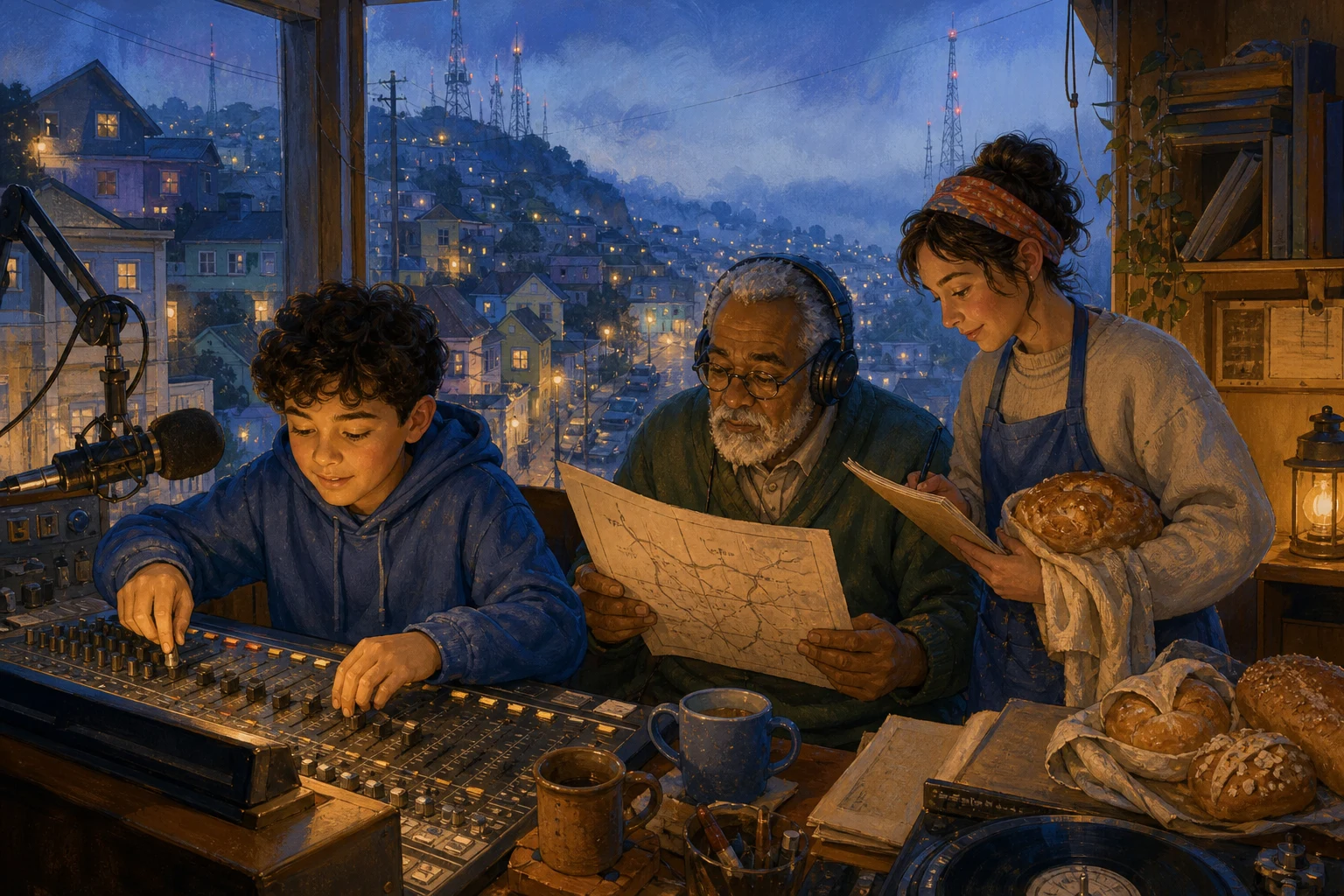
Make Room on Channel Seven
Ilya wants to make the neighborhood station flawless. Instead, a retired dispatcher and a hesitant baker teach him that the best broadcast is not the loudest one, but the one that leaves room for everyone.
Read Story →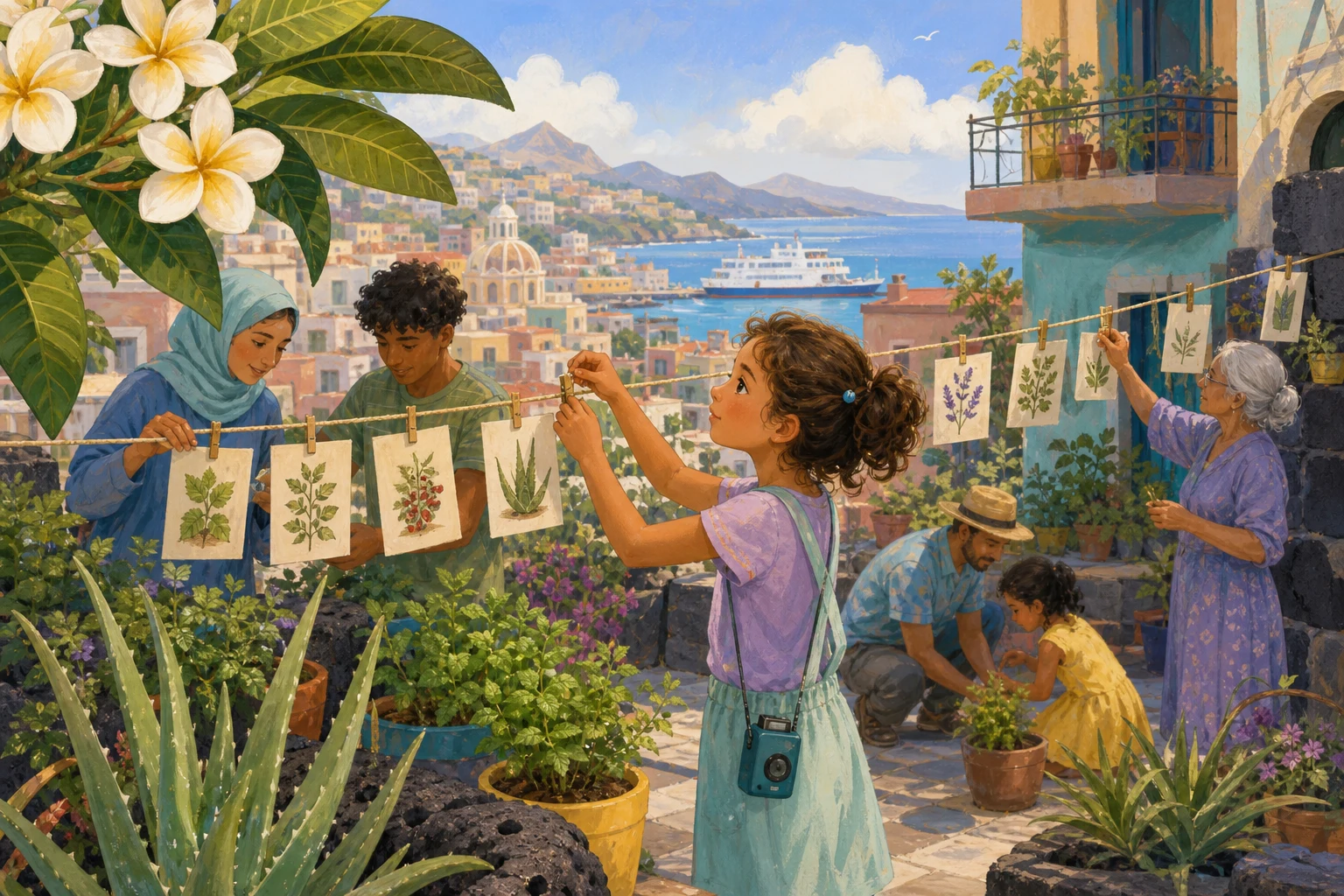
Names Beneath the Leaves
Sela thought every plant needed a fact card. Then the residents taught her that gardens remember people, too.
Read Story →
Ink Along the Waterway
Rina thought repainting the market lane meant making everything match. Then a missing blue heron sent three people the wrong way.
Read Story →